Showing posts with label WCPL. Show all posts

Wednesday, May 6, 2009

Home Ages 6-10

PREVIEW
Home. In this unique volume, prominent American writers from the past and present--Willa Cather, Henry David Thoreau, Eloise Greenfield--give voice to the region of the country each calls home. Thomas Locker's lavish oil paintings accompany each passage, transporting the reader from the crashing waves of the Pacific coast to the bluebonnet fields of the Texas prairie. Come along on a spectacular journey through our home--America.
Home: A Journey through America
By Thomas Locker, Candace Christiansen
Compiled by Thomas Locker
Illustrated by Thomas Locker
Edition: illustrated
Published by Houghton Mifflin Harcourt, 1998
ISBN 015201473X, 9780152014735
32 pages
Lush and romantic paintings of a broad ...... range of landscapes illustrate the poetry and prose of a dozen American authors and poets, whose homes ranged from the Hudson River Valley to the midwestern prairies and beyond. Each spread includes a poem or other brief block of text about home, as well as a biographical snippet about the featured writer. On the opposite page is a painting that illuminates an aspect of the writing; in general, Locker's landscapes are august and riveting. The selection of those included is a hybrid: some names seem written in stone (Frost, Irving, Thoreau, Cather, Sandburg), while others are still very much of the earth (Bruchac, Yolen, Greenfield, Locker). Nevertheless, from the East Coast to the West, the book shows how individual feelings about nature and home have shaped the artistic efforts of writers.
Kirkus Reviews Copyright (c) VNU Business Media, Inc.
From Publishers Weekly
This visual pilgrimage to the native terrain of a variety of venerable writers suffers from Locker's visually homogeneous treatment of America's diverse landscapes. The journey begins in San Francisco, Robert Frost's birthplace (though most readers likely equate the poet with New England). His "Once by the Pacific" is comprised of strong, clear images: the "great waves" that "thought of doing something to the shore/ That water never did to land before"; the clouds, "low and hairy in the skies." In Locker's painting, however, power is diverted from Frost's fierce flexure of the sea to a purple-to-black sky brooding over agitated water and cliffs glanced by light. Throughout Locker's tour, his brush seems dipped in the Hudson Valley light of his own homeland, and not surprisingly, the standout paintings here are those paired with an excerpt from Washington Irving's "Rip Van Winkle"?depicting a leisurely sail up the Hudson River, the boat dwarfed by the dramatic Kaatskill mountains aflame at sunset?and his own "Birches in the Fall" with white trunks leaning inward, inviting readers down an autumn trail of golden grasses. But when called upon to conjure the Southwest of Pat Mora's "Gold" or the Amish country depicted in Merle Good's "Song of a People," Locker fails to capture the indigenous palette and mood. Unfortunately, the book seems driven by its theme, rather than a celebration of it. Ages 6, 7, 8, 9, 10.
Copyright 1998 Reed Business Information, Inc.

From School Library Journal
Grade 3 Up-American landscapes as viewed via paintings and words. Locker and Christiansen have collected poetic and narrative views of scenes from across the continent by such well-known writers as Robert Frost, John Muir, and Washington Irving as well as modern writers such as Pat Mora, Jane Yolen, and Joseph Bruchac. The oil paintings, in true Lockerian tradition, reflect an inner view of landscape, one reminiscent of early British painters who came to paint American scenes but made each of them look like home. This romanticized approach, relying not on accuracy, perspective, or detail, but rather on creating a mood, may appeal to adults but the use of the same color palette, massive cloud effects, and little action will not capture the imagination or hold the interest of children.
Ronald Jobe, University of British Columbia, Vancouver, Canada
Copyright 1998 Reed Business Information, Inc.

Thursday, April 30, 2009

A Play's the Thing Ages 5-9

PREVIEW
Miss Brilliant is full of ideas. With her students she celebrates everything: teeth, corn, mummies, spiders -- and plays!
Only José isn't interested in "Mary Had a Little Lamb," or being a Brilliant Player, or even his surprise role. But as José learns about drama and tension and working with his classmates, he finds that he, too, has his own special place in Miss Brilliant's class and in her heart.
Aliki has created a memorable teacher and a class full of personalities that all readers will want to join.
A Play's the Thing By Aliki
Illustrated by Aliki
Edition: illustrated
Published by HarperCollins, 2005
ISBN 0060743557, 9780060743550
32 pages
Inventive and jolly, Aliki tells a tale in her familiar comic-strip style, with shiny bright colors and enough sly references to convulse adults, even if the kids sail past them. Miss Brilliant, who must have gone to the same teachers' college as Ms. Frizzle, announces to her class that they are going to put on a play based on "Mary Had a Little Lamb." Her multicultural cast hops to with a will, except for José, who bears a passing resemblance to a certain Pierre who didn't care and who spends almost the whole story acting out against everyone else. They write the script—Miss Brilliant assigns them their roles (Bandana, whose English isn't big yet, is a musician; Steffi, who uses a wheelchair, is the narrator)—lines are written and learned, costumes and scenery prepared. The parents are invited, and it's a great success even for José, who not only plays the teacher but whose mom leaves work early to see him. The children are a rainbow of the American classroom, and the lessons gently taught. (Picture book. 5, 6, 7, 8, 9)
Kirkus Reviews Copyright (c) VNU Business Media, Inc.
Gr 1-3-Aliki's latest production ...
... explores how an experienced teacher uses a student-led performance of "Mary Had a Little Lamb" to help one of the children deal with his bullying behavior. When Miss Brilliant's class decides to put on a fractured version of the story poem, Jos must learn to work with his classmates and overcome his antisocial tendencies. Children will readily identify with the variety of characters and dynamics that populate this class. The students represent a smorgasbord of nationalities and often make references to their cultural heritages. The format of the book resembles comic strips with blocked pictures in various sizes used to contain the action and conversation bubbles. An independent narrative runs beneath these boxes. This text needs the dialogue to flesh out the plot. It is in the conversation bubbles that Jos 's defiant attitude and self-awareness are evident. Using the book with a group may prove difficult because children will not be able to appreciate the nuances of the boy's expressions and his deliberately unkind actions. This is, however, the type of work that children will be drawn to again and again because they recognize their world so aptly captured in both word and art. Each time they revisit, they will find something new in the colorful cartoon illustrations that prove that Aliki knows her audience.-Maura Bresnahan, High Plain Elementary School, Andover, MA «

Thursday, April 23, 2009

The Nutcracker Ballet Mystery Ages 9-12


Madame Dugrand's Dance Academy is rehearsing for "The Nutcracker." Shana Edwards, a recent graduate who has made a big splash in New York, is returning to River Heights to star in the show. But the closer the dancers get to show time, the clearer it becomes that the stage is set for disaster. Nancy will have to conduct her investigation with extreme precision and agility.
The Nutcracker Ballet Mystery Number 110
By Carolyn Keene
Edition: reissue
Published by Simon & Schuster Children's Publishing, 1992
ISBN 0671730568, 9780671730567
160 pages Ages 9, 10, 11, 12

Wednesday, April 22, 2009

Sir Cumference and the Sword in the Cone Ages 9-11

King Arthur's knights try to find a sword using geometry principles.Sir
Cumference and the Sword in the Cone
By Cindy Neuschwander
Illustrated by Wayen Geehan, Wayne Geehan
Edition: illustrated
Published by Charlesbridge, 2004
ISBN 1570916004, 9781570916007
32 pages Ages 9-11
Gr 3-5-Neuschwander retells "The Sword ...
... in the Stone" from a mathematical angle. Readers follow along with Sir Cumference and Lady Di of Ameter as their son Radius and his friend Vertex set out to find Edgecalibur. Filled with riddles and puns, the story is sure to delight students with some geometry background. Geehan's bright oil, acrylic, and pen-and-ink paintings include all the visual details that the text needs to help solve this geometrical mystery. If your students have enjoyed the first three books in the series, they will certainly want this one. Make sure to share these gems with your math teachers. The books can be used to support educational initiatives such as multiple intelligences, and students who are strong in verbal/linguistic areas will appreciate the integration of literature into their math lessons.-Christine E. Carr, Lester C. Noecker Elementary School, Roseland, NJ

Why Did the Chicken Cross the Road? Ages 5-8

Award-winning artists, using hilarious illustrations, present their own verison of the classic joke, from Mo Willems's chicken who confesses his motives to a police officer, to Marle Frazee's chicken who is searching for a luxury "coop."

Subjects

Why Did the Chicken Cross the Road?
By Jon Agee
Illustrated by Jerry Pinkney
Published by Dial Books for Young Readers, 2006
ISBN 0803730942, 9780803730946
40 pages
Fourteen artists, nearly all of them ...... household names, offer answers to the classic title question. The punch lines are as varied as the visuals, with chickens fleeing threats such as dinosaurs (Jon Agee); "mutated zombie chickens from Mars" (Harry Bliss); running toward a more glamorous henhouse (Marla Frazee), or an enticing tangle of mysterious creatures and shapes (Mary GrandPr). Some are crossing because the light changed (Lynn Munsinger, David Shannon), a baseball went through a window (Chris Sheban) or a tasty treat beckons (Judy Schachner, Jerry Pinkney, David Catrow). Chris Raschka closes with a sphinx looking up at the viewer, murmuring, "You tell me," and all of the contributors' chickens march across a final spread with jokey answers to another query: "Why did the artist cross the road?" Evidently offered not to support a charity but just for fun (plus a little promotion), this gallery of clever pullet surprises will draw crows of delight. (Picture book. 5, 6, 7, 8, adult) Kirkus Reviews Copyright (c) VNU Business Media, Inc

Sunday, April 19, 2009

Dragon Reading List

http://www.storyplace.org/eel/activities/readinglist.asp?id=55&themeID=12

Book Cover
Buy this book online
Day of the Dragon King

Mary Pope Osborne
Illustrated by Sal Murdocca

Jack and Anna are on their fourteenth adventure through the door of the magic tree house. Now, Master Librarians, they have been given the assignment of saving another story. They are sent to Ancient China in the time of the first emperor. Can they find the story before the Dragon King destroys all the books? This is an exciting series for beginner readers.

Book Cover
Buy this book online
Dragon's Fat Cat: Dragon's Fourth Tale

Written & Illustrated by Dav Pilkey

When Dragon rescues a fat cat out of the snow he isn't sure how to take care of her. She doesn't seem to like ketchup on ice cream for meals nor the box full of dirty rags and trash Dragon has made up for her as a litter box. And what exactly are those smelly yellow puddles? Just when Dragon thinks he knows what to do Cat has another "surprise" for him. Through bright watercolor illustrations Pilkey creates a hilarious story that any pet owner will love.

Book Cover
Buy this book online
Eyes of the Dragon

Margaret Leaf
Illustrated by Ed Young

When a huge wall is built around a village for protection, it looks rather plain. So the magistrate of the village decides that a famous dragon painter should decorate the wall. The painter's conditions for the work are that he can paint in his own manner and the village accepts it. The magistrate agrees. However, when the painter finally finishes the magistrate refuses to honor the conditions, because the dragon has no eyes. Despite a warning of what can happen, the magistrate persuades the painter to add the dragon's eyes. After doing so the painter quickly leaves. What happens next is surprising and terrifying; an example of what can happen when one does not honor one's word.

Book Cover
Buy this book online
Saint George and the Dragon

Retold by Margaret Hodges
Illustrated by Trina Schart Hyman

In this retelling from Edmund Spenser's Faerie Queene, the Red Cross Knight is sent by the Queen of the Fairies to save a knigdom from a fierce dragon. A three-day battle takes place ending with the dragon's death. The Red Cross Knight's bravery wins him the kingdom, a wife, and his title, Saint George of Merry England. Hodge's dramatic retelling of this legend is accompanied by beautifully detailed illustrations that won Hyman a Caldecott Medal.

Book Cover
Buy this book online
The Paper Bag Princess

Robert N. Munsch
Illustrated by Michael Martchenko

Princess Elizabeth lives in a magnificent castle, wears beautiful expensive clothes and is going to marry her Prince Charming. Unfortuntely though, her plans are destroyed when a fierce dragon demolishes her castle, burns all her clothes and kidnaps her beloved Ronald. With nothing else to wear but a paper bag the Princess follows the dragon's charred path determined to save her Prince Charming. Soon she has devised a clever way to outwit the dragon and rescue her Prince, but what will Ronald's reaction be when he is finally saved? The answer is surprising. Witty illustrations and a flowing storyline create a funny tale with a great message.

Book Cover
Buy this book online
The Paper Dragon

Marguerite W. Davol
Illustrated by Robert Sabuda

Mi Fei, a humble painter, likes his simple quiet life. But all this changes when he is chosen to combat the mighty dragon Sui Jen, who is destroying villages everywhere. Through fold-out pages filled with bright, expressive illustrations, we watch as Mi Fei trys to outwit the fearless dragon. The illustrations, made from cut and painted tissue paper, vibrantly tell this Chinese tale. An exciting and visually appealing story that should not be missed.

Pirates Don't Wear Pink Sunglasses Age 11

Pirates Don't Wear Pink Sunglasses
By Debbie Dadey, Marcia Thornton Jones
Edition: illustrated
Published by Tandem Library Books, 1994
ISBN 0606066713, 9780606066716
78 pages Age 11
The Bailey School's new rowing coach acts suspiciously like a pirate.
There are some pretty weird grown-ups living in Bailey City. But could the boat instructor at Camp Lone Wolf really be a pirate searching for buried treasure? The Bailey School Kids are going to find out!

Pirates companion to Pirates Past Noon Ages 7-8

Pirates: A Companion to Pirates Past Noon
By Mary Pope Osborne, Will Osborne, Sal Murdocca
Illustrated by Sal Murdocca
Edition: illustrated
Published by Random House Children's Books, 2001
ISBN 0375902996, 9780375902994
128 pages
Reading Level 4.9 Companion to Age 7, 8

Thursday, April 16, 2009

Bing Bang Boing by D Florian Ages 6-12

Thirty-five Pages of Preview

Bing Bang Boing: Poems and Drawings
By Douglas Florian
Illustrated by Douglas Florian
Edition: illustrated
Published by Houghton Mifflin Harcourt, 1994
ISBN 0152337709, 9780152337704
144 pages
Meet Genny Glubber, who’s fat like blubber, and Mr. Giles, who has seven smiles. And Little-Naughty-Nasty Ned, who glued his brother to a bed. Come along and join the fun--this book has a poem for everyone! “From the sunlit yellow of its jacket to the humorous tone of its verse, this should prove a popular choice for poetry shelves.”--Booklist

Bing Bang Boing
By D. Florian
Published by Tandem Library, 1996
ISBN 0785778276, 9780785778271

An illustrated collection of more than 150 nonsense verses. Recommended by the AES Advisory Committee.
Ages 6, 7, 8, 9, 10, 11, 12

Laugh-eteria Ages 6-12

Thirty-eight Page Preview

Laugh-Eteria
By Douglas Florian
Illustrated by Douglas Florian
Edition: illustrated
Published by Houghton Mifflin Harcourt, 1999
ISBN 0152020845, 9780152020842
160 pages Ages 6, 7, 8, 9, 10, 11, 12
Karate Kids
One was a black belt. One was a brown. One had a loose belt; His pants fell down.
Silly, irreverent, and always clever, these poems showcase Douglas Florian’s talent for turning plain old language into outrageously entertaining verse. Page after page of witty wordplay and droll black-and-white drawings are guaranteed to knock the socks off devoted poetry fans and newcomers alike.
Florian's seventh collection of verse is ...
... also his most uneven; though the flair for clever rhyme that consistently lights up his other books, beginning with Monster Motel (1993), occasionally shows itself--""Hello, my name is Dracula/My clothing is all blackula./I drive a Cadillacula./I am a maniacula""--too many of the entries are routine limericks, putdowns, character portraits, rhymed lists that fall flat on the ear, or quick quips: ""It's hard to be anonymous/When you're a hippopotamus."" Florian's language and simple, thick-lined cartoons illustrations are equally ingenuous, and he sticks to tried-and-true subjects, from dinosaurs to school lunch, but the well of inspiration seems dry; revisit his hilarious Bing Bang Boing (1994) instead.
Kirkus Reviews Copyright (c) VNU Business Media, Inc.

Poetry by Douglas Florian Ages 6-12


April is Poetry Month

BEAST FEAST: POEMS


MAMMALABILIA


INSECTLOPEDIA


All by Douglas Florian


Ages 6, 7, 8, 9, 10, 11, 12

Comets, Stars, the Moon, and Mars Ages 6-12

PREVIEW
Comets, Stars, the Moon, and Mars: Space Poems and Paintings
By Douglas Florian
Illustrated by Douglas Florian
Edition: illustrated
Published by Houghton Mifflin Harcourt, 2007
ISBN 0152053727, 9780152053727
56 pages
Blast off with Douglas Florian's new high-flying compendium, which features twenty whimsical poems about space. From the moon to the stars, from the Earth to Mars, here is an exuberant celebration of our celestial surroundings that's certain to become a universal favorite among aspiring astronomers everywhere. Includes die-cut pages and a glossary of space terms.
Stunning mixed-media illustrations ...
... accompany a series of poems that celebrate the wonder and mystery of space. From the universe, the sequence narrows its focus to the galaxy, the solar system and then each body in turn, from the sun to poor demoted Pluto, and beyond. The verse is characteristically playful, wrapping itself around astronomical facts with ease. Readers will learn about the temperature and size of the sun, our moon's phases and Voyager 2's discovery of Neptune's rings. Delightful as the poems are, however, it's this volume's illustrations that surpass. Bright gouache on brown paper bags lend texture to each spread; stamped words allow the illustrations to incorporate such details as names of moons and "sun" in several different languages; collage elements add further whimsy to the whole. To top off this feast for the eyes, occasional die-cuts provide telescopic windows onto adjoining spreads, firmly establishing for the reader the truth that space is a vast continuum, with new surprises in every corner of the sky. Each poem receives a thumbnail gloss at the end, offering additional facts or extending the information presented earlier. Glorious. (Picture book/poetry. 7, 8, 9, 10, 11, 12)
Kirkus Reviews Copyright (c) 4/1/2007 VNU Business Media, Inc.
Gr 1–5 Ages 6, 7, 8, 9, 10, 11— Nothing gladdens the heart of ...
... believers in good poetry for children more than a new collection by Florian, whose verses and paintings consistently capture the essence of his featured themes. This one literally sings the music of the spheres. Twenty playfully lyrical poems treat topics such as the universe, the individual planets, constellations, and black holes. Each selection is presented on its own spread and adorned with a magical painting done in gouache, collage, and rubber stamps on brown paper. Circles abound in the artwork, and many pages have round cut-outs that lead into the next picture. For example, "the earth" ("Two-thirds water./One-third land./Valleys deep./Mountains grand") is illustrated with a colorful globe decorated with circled collage prints of animals and plants. A smaller orb appears nearby, made from a cut-out circle that reveals part of the illustration for the next selection, "the moon." Some of the paintings incorporate mythological names and images. The pleasing blend of faded shades and brilliant colors, of old-fashioned prints and fanciful sketches, makes the illustrations seem both antique and high-tech. An appended "Galactic Glossary" provides additional information. In both language and artwork, Florian strikes the perfect balance between grandeur and whimsy. Like Myra Cohn Livingston and Leonard Everett Fisher's Space Songs (Holiday House, 1988; o.p.), this book is a work of art worthy of the vastness of its subject.—Kathleen Whalin, York Public Library, ME

Friday, April 10, 2009

Not One Damsel in Distress: World Folktales for Strong Girls Ages 8-12

PREVIEW
Not one damsel in distress: world folktales for strong girls
By Jane Yolen, Susan Guevara
Illustrated by Susan Guevara
Edition: illustrated
Published by Houghton Mifflin Harcourt, 2000
ISBN 0152020470, 9780152020477
116 pages Ages 8,9,10,11,12
These thirteen folktales have one thing in common: brainy, brawny, brave heroines--and not one damsel in distress! From Bradamante, the fierce female medieval knight, to Li Chi, the Chinese girl who slays a dreaded serpent and saves her town, these heroines use their cunning, wisdom, and strength to succeed.
Drawing from diverse cultures around the world, renowned author Jane Yolen celebrates the smart, strong, and sassy heroines of legend and lore in a collection that will encourage bravery in every girl.
In her introduction, the author states ...
... that the 13 stories in this book "have always been around, hidden away in the back storeroom of folklore." No more. Yolen has managed to present these legends and folktales as originally told, with their spunky, canny, and courageous girls and women heroes as feisty and funny as they were to the people of their time. The tales come from all over the world; some of their protagonists are well-known, such as Greece's Atalanta the Huntress, but many others have been either lost over time or distorted in one way or another to make them palatable to readers who refused to recognize that women were fully capable human beings. There's Nana Miriam of Niger, who uses the powerful potions in her juju bag to save her father from a vicious hippopotamus. Or China's Li Chi, who refuses to be sacrificed to the serpent who has terrorized her village and instead uses her wits, a snake-hunting dog, and a sharp sword to slay the creature. Then there's England's Molly Whuppie, who serves her king by outwitting a giant and ends up a queen, in a rollickingly funny story that's only equaled by the Ozark tale of Pretty Penny, who uses her wits to save her father's money and make a lot more from the highway thief who tries to rob her. There are many more, all of them splendidly told by an author who can not only spin a mean folktale, but makes some nice subtle points in doing so. The book is strengthened even more by Yolen's extensive "Notes on the Stories" and an excellent bibliography for those who want more, making it a useful reference tool for classroom or library. (Fiction. 8-12)
Kirkus Reviews Copyright (c) VNU Business Media, Inc.

A Bad Case of Stripes Storyline Online AudioBook

A Bad Case Of Stripes
By David Shannon
http://www.storylineonline.net/
Illustrated by David Shannon
Published by Demco Media, 2004
ISBN 0606305815, 9780606305815 Ages 6, 7, 8, 9
Read and Acted by Sean Astin
In order to ensure her popularity, Camilla Cream always does what is expected, until the day arrives when she no longer recognizes herself.
RearWriteThink Lesson Plan
After she refuses to eat her lima beans, Camilla finds herself covered with stripes. The stripes change into stars, polka dots, and other patterns. Camilla overcomes her "illness" when she learns to be herself. INDIVIDUALITY, POPULARITY

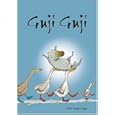
Guji Guji Storyline Online AudioBook

Guji Guji
By Chih-Yuan Chen, Zhiyuan Chen, María Fernanda Pulido Duarte
PREVIEW
http://www.storylineonline.net/
Translated by María Fernanda Pulido Duarte
Illustrated by Chih-Yuan Chen
Edition: illustrated
Published by Kane/Miller Book Publishers, Inc., 2007
ISBN 1933605340, 9781933605340 Ages 3, 4, 5, 6, 7, 8, 9
36 pages Read ROBERT GUILLAUME the voice of Rafiki in The Lion King
Raised from an egg by Mother Duck, Guji Guji is quite content with his life as a duckling, despite the fact that he doesn't look anything like his brothers. Then he meets three nasty creatures who not only convince him that he is, like them, a crocodile, but also try to persuade him to deliver his duck relatives for their dinner. Suggested level: junior, primary.
PreS-Gr 3-One day, an extra-large egg ...
... rolls right into Mother Duck's nest. She is busy reading and doesn't notice the new addition, but this lucky event will change her life. Her hatchlings include a yellow duckling; one with blue spots; another with brown stripes; and a rather unusual, crocodile-shaped youngster, named after his first words. Guji Guji grows bigger and stronger than his siblings (and more crocodilelike), but Mother loves all her offspring the same. When three duck-hungry crocodiles make fun of Guji Guji's ways and try to tempt him into betraying his family, he is put to the test. This beautifully written story has much to say about appreciating families and differences, and it will resonate with children long after the final page is turned. Chen's unique illustrations are compelling, down to the beautiful silhouette endpapers. The rich blues and earth tones and dramatic page layouts create moving scenes, but the quirky details and characters' expressions are hilarious. This charming spin on the ugly duckling theme is a must-have for any collection.-Julie Roach, Malden Public Library, MATAIWAN REVIEW

Tuesday, April 7, 2009

The Knight At Dawn, Knights and Castles

The Knight at Dawn
By Mary Pope Osborne, Sal Murdocca
Illustrated by Sal Murdocca
Edition: illustrated
Published by Random House, 1993
ISBN 067982412X, 9780679824121
65 pages
Illus. in black-and-white. Jack and Annie travel back in time to medieval England for an adventure inside a storybook castle, from feasting hall to dreadful dungeon.

Knights and Castles
By Will Osborne, Mary Pope Osborne, Sal Murdocca
Illustrated by Sal Murdocca
Edition: illustrated
Published by Random House, 2000
ISBN 0375802975, 9780375802973
119 pages
Jack and Annie look at knights, armor, and life in a castle. Grades 1-4 Ages 6, 7 , 8 , 9, 10 First Chapter Books

Monday, April 6, 2009

The Usborne Book of Secret Codes


Usborne Books
The Usborne Book of Secret Codes
by Diana Riddel

Grades: 3 - 5
Paperback Book
0.149 x 7.855 x 9.882
32 pp.
Item #:NTS63152
Weight (lbs):0.206 This informative series featuring favorite subjects brings the excitement of discovery to curious readers. Whether enhanced by full-color photographs, stunningly realistic artwork, cutaway diagrams, amusing illustrations, or step-by-step guides, these materials immerse and engage.

This fascinating how-to book allows kids to create and use their own codes - all kinds of secret codes, some based on the alphabet, on grids, on calendars, or on numbers and dots. A story is told throughout the book that can be followed only by using the demonstrated codes.
Scholastic Store $5.95

Saturday, April 4, 2009

Our White House: Looking In, Looking Out Ages 8+


Our White House: Looking In, Looking Out. 108 contributors-- authors (from Katherine Paterson to Kate DiCamillo to Jon Scieszka), illustrators (from Leo and Diane Dillon to Peter Sis to Brian Selznick), and famous folks (from Charles Dickens and Walt Whitman to Richard Nixon and Dick Cheney). At 242 well-designed pages, this anthology is a tribute to American history, a multi-faceted jewel for family sharing and endless uses in the classroom (to be developed on its companion website ). A few poems and short stories and plays sprinkle the mix, but mostly this is a nonfiction account of history as it affected our White House—the emphasis on our—and a call to learn more about being an American citizen (Candlewick, ages 8, 9, 10, 11, 12, 13, 14, 15, 16, 17, 18 ). FROM:

The Way We Work: Human Body - Ages 10+


It’s surely the nonfiction event of the year—David Macaulay’s The Way We Work: Getting to Know the Amazing Human Body. No wonder he won a “genius grant” from the MacArthur Foundation, which in part allowed him to complete this 336-page event, I mean book. Really, all you can say is “wow”—at the structural magnificence that is the human body and at Macaulay’s dramatic, clear drawings conveying every detail. Like a 21st-century Leonardo da Vinci, though presumably without the real corpses, he gets inside us and dissects like mad, and not for his own edification (like Leo), but ours. This tome has tremendous amounts of info, boiled down to its essence, and obviously thoroughly vetted by experts. Kids who persist with the somewhat textbook-y text, co-written with Richard Walker, will learn how we pick up an apple, breathe, think, blink, digest, reproduce, and everything else the body does. To me the most interesting of the seven chapters was “Battle Stations,” about the way we try to fight off flu and other threats. I would think this book would be of special interest to kids who have had anything go wrong with their bodies, but it's also a gift for budding biologists, and anyone who likes to browse (Walter Lorraine/Houghton Mifflin, ages 10, 11, 12, 13, 14, 15, 16, 17, 18). FROM:

Snowflake Bentley

Front Cover
By Jacqueline Briggs Martin
Illustrated by Mary Azarian
Edition: illustrated
Published by Houghton Mifflin, 1998
ISBN 0395861624, 9780395861622
32 pages
A biography of a self-taught scientist who photographed thousands
of individual snowflakes in order to study their unique formations.

See the Snowflake Crystals


http://snowflakebentley.com/


Wikipedia

Critical Review of Illustrations

Snowflake Bentley

on-line unit: http://www.eduscapes.com/caldecott/99a.html

other on-line resources for snowflakes:

http://www.teelfamily.com/activities/snow/science.html

Caldecott Award

Each year a Caldecott Medal, named in honor of English illustrator Randolph J. Caldecott, goes to the artist of the most distinguished American picture book for children published in the United States during the preceding year. The American Library Association sets the criteria by which a committee views and judges children’s picture books each year. The committee members consider (American Library Association:

- excellence of execution in the artistic technique employed.

- excellence of pictorial interpretation of story, theme, or concept; of appropriateness

of style of illustration to the story, theme, or concept; of delineation of plot, theme,

characters, setting, mood, or information through the pictures.

- excellence of presentation in recognition of a child audience. (p. 2)

Using this list as a measuring stick, it surprises few that Mary Azarian won this year’s Caldecott Award for her outstanding artwork in Snowflake Bentley (1998). Jacqueline Briggs Martin’s eloquent portrayal of the life of Wilson Bentley, noted authority on snowflakes, provides the perfect prose for Azarian’s colorful woodcut art form. The pictorial interpretation of the story complements Martin’s description of the rural landscape of Vermont as it looked in the late 1800's. Simple, detailed illustrations provide the visual beauty of this book. Woodcuts give a flavor of times past and emphasize line and structure. The framed borders reflect the beauty of snowflakes as Martin describes them to the reader and also provide space to include bibliographic information about Bentley that might have slowed the text down too much for children to enjoy.

Cleverly done illustrations portray the literary elements of a picture book. To judge the worthiness of Azarian’s work in Snowflake Bentley, a look at the way she portrays these elements helps us make sound judgements about the true quality of the illustrations. The illustrations in this award-winning book reflect character, plot, theme, setting, point of view, style, and tone.

Azarian’s portrayal of characters in this book compliments Martin’s description of Bentley, at various stages in his life, his parents, and his friends. On the first page of the book, Martin describes the difficult life of a farmer who must do his work with an ox and sled. Azarian chooses to depict a stoop-shouldered figure coming from a barn in the dark with only a hand-held lantern to light his way as he walks back to the warm glow of the yellow window-lights of his home. The deep snow surrounding the farmer parts way to leave him only a narrow path by which to walk to his house. The lantern lets readers know that the snow’s true color reflects white, but the surrounding snow appears to have a blue-gray tint, alerting the reader to the fact that no artificial street lights exist on this farm. From the very first page readers know something about the farmer holding the lantern.

Azarian’s characters appear robust, round, and solid looking. The clothes they wear seem appropriate for the time in history that this story takes place. Rosy cheeks and smiles let the readers know that little turmoil surrounds the family in this story. Illustrations of Bentley as he reaches adulthood make him look very much like his father. A strong feeling of "family" permeates the text and the accompanying illustrations. Facial expressions on Bentley’s mother suggest demureness and worry lines on his father’s face imply concern and a feeling of disconcertedness. Bentley’s youthful face reflects joy and wonder when he works with his snowflakes, cameras, and as he shows his parents what he discovers.

Azarian’s illustrations also add to the plot of this story. From observing the second page of this book, readers can tell much from the open arms of Bentley as he welcomes the snowflakes onto his mittens. The abundance of snow in this scene reinforces the text in declaring that 120 inches of snow fall occurs here every year. Without words in this text, readers would know that Bentley loved nature, as depicted in the illustrations of him gently holding a butterfly, Bentley bringing his mother apple blossoms, his intent work with a grasshopper, and his constant fascination with snow. Perhaps the most gripping portrayal of plot comes at near the end of the book as Bentley seems "lost" in a blizzard of snow. Azarian depicts Bentley walking away from us into oblivion, his footsteps disappearing behind him.

The theme of this book seems to suggest that people should follow their passion, regardless of what other’s may think or how impossible it may seem (Azarian, 1999). Subordinate themes might suggest the merits of a supportive family and of hard work toward reading a goal. Azarian chooses to show us Bentley depicted as an outsider as he walks past his friends building a fort, to pursue his passion. Other important illustrations relating to theme show Bentley explaining the camera he wants to his mother and his parents discussing the impracticality of such a purchase.

We see Bentley in complete solitude as he works with his microscope and his drawing of snowflakes, suggesting how lonely and long the nights might seem to those pursuing a dream.

Azarian uses all the tricks up her sleeve to bring us the setting in this book. This seems the most powerful story element portrayed by the artist. Azarian’s use of line appears consistent throughout the book. Horizontal and vertical lines meeting at right angles suggest stability. Doorways, panels on doors, paneling, window frames, flooring, and sideboards all indicate to the reader that a sense of security and permanence exists in this story. The artists use of color with muted shades of white, blue, and gray give character to the snow in all phases of the snowfalls. The farm and farmhouse appear inviting and summon the reader to a simpler place and time. Warm colors used inside the house suggest comfort and assurance. We can tell from the illustrations in this book that the place where Wilson Bentley grew up provided him an ideal place to grow and dream. Azarian’s depiction of the setting in this story initially "grabs" the reader and the images stay with the reader long after the book closes.

The point-of-view that Azarian takes in her illustrations matches that of the author, third person. Readers are invited inside Bentley’s home and his dream as the author and illustrator work together to make readers informed observers. Looking at the illustrations in this book mimics browsing through a Bentley family album of snapshots of their lives.

Azarian’s style and tone of illustration in this book plays heavily on realism. People, buildings, and animals appear in proportion to the surroundings. Very calm pictures match informative and straightforward text to tell Bentley’s life story. Openness and honesty flow both from the text and the illustrations in this book.

The very effective pictures in this book enhance and compliment the text. Children will love a book about snow, but on the surface the story of a man who thought of little else seems less than compelling. Azarian lets children feel the snow, feel the passion, and sense that a dream pursued can provide a fulfilling life. We get the emotional context of this story from Azarian’s talented portrayal of the elements that make a story worth telling.

Bibliography

American Library Association. ALSC: Caldecott medal descriptors, history, & criteria. On-line:

Azarian, M. (1999). Caldecott medal acceptance. The Horn Book Magazine, 75(4), pp. 423-429.