Showing posts with label Authors. Show all posts

Wednesday, May 6, 2009

Home Ages 6-10

PREVIEW
Home. In this unique volume, prominent American writers from the past and present--Willa Cather, Henry David Thoreau, Eloise Greenfield--give voice to the region of the country each calls home. Thomas Locker's lavish oil paintings accompany each passage, transporting the reader from the crashing waves of the Pacific coast to the bluebonnet fields of the Texas prairie. Come along on a spectacular journey through our home--America.
Home: A Journey through America
By Thomas Locker, Candace Christiansen
Compiled by Thomas Locker
Illustrated by Thomas Locker
Edition: illustrated
Published by Houghton Mifflin Harcourt, 1998
ISBN 015201473X, 9780152014735
32 pages
Lush and romantic paintings of a broad ...... range of landscapes illustrate the poetry and prose of a dozen American authors and poets, whose homes ranged from the Hudson River Valley to the midwestern prairies and beyond. Each spread includes a poem or other brief block of text about home, as well as a biographical snippet about the featured writer. On the opposite page is a painting that illuminates an aspect of the writing; in general, Locker's landscapes are august and riveting. The selection of those included is a hybrid: some names seem written in stone (Frost, Irving, Thoreau, Cather, Sandburg), while others are still very much of the earth (Bruchac, Yolen, Greenfield, Locker). Nevertheless, from the East Coast to the West, the book shows how individual feelings about nature and home have shaped the artistic efforts of writers.
Kirkus Reviews Copyright (c) VNU Business Media, Inc.
From Publishers Weekly
This visual pilgrimage to the native terrain of a variety of venerable writers suffers from Locker's visually homogeneous treatment of America's diverse landscapes. The journey begins in San Francisco, Robert Frost's birthplace (though most readers likely equate the poet with New England). His "Once by the Pacific" is comprised of strong, clear images: the "great waves" that "thought of doing something to the shore/ That water never did to land before"; the clouds, "low and hairy in the skies." In Locker's painting, however, power is diverted from Frost's fierce flexure of the sea to a purple-to-black sky brooding over agitated water and cliffs glanced by light. Throughout Locker's tour, his brush seems dipped in the Hudson Valley light of his own homeland, and not surprisingly, the standout paintings here are those paired with an excerpt from Washington Irving's "Rip Van Winkle"?depicting a leisurely sail up the Hudson River, the boat dwarfed by the dramatic Kaatskill mountains aflame at sunset?and his own "Birches in the Fall" with white trunks leaning inward, inviting readers down an autumn trail of golden grasses. But when called upon to conjure the Southwest of Pat Mora's "Gold" or the Amish country depicted in Merle Good's "Song of a People," Locker fails to capture the indigenous palette and mood. Unfortunately, the book seems driven by its theme, rather than a celebration of it. Ages 6, 7, 8, 9, 10.
Copyright 1998 Reed Business Information, Inc.

From School Library Journal
Grade 3 Up-American landscapes as viewed via paintings and words. Locker and Christiansen have collected poetic and narrative views of scenes from across the continent by such well-known writers as Robert Frost, John Muir, and Washington Irving as well as modern writers such as Pat Mora, Jane Yolen, and Joseph Bruchac. The oil paintings, in true Lockerian tradition, reflect an inner view of landscape, one reminiscent of early British painters who came to paint American scenes but made each of them look like home. This romanticized approach, relying not on accuracy, perspective, or detail, but rather on creating a mood, may appeal to adults but the use of the same color palette, massive cloud effects, and little action will not capture the imagination or hold the interest of children.
Ronald Jobe, University of British Columbia, Vancouver, Canada
Copyright 1998 Reed Business Information, Inc.

Monday, April 27, 2009

Websites of Authors and Illustrators, Members of ABC

Association of Booksellers for Children has a web page of Authors and Illustrators who are members of ABC. There are links to their individual web pages.
http://web.archive.org/web/20080108050702/www.abfc.com/authors.html

Monday, April 13, 2009

Naming Liberty Ages 7-12

http://www.trelease-on-reading.com/whatsnu-reviews.html

Naming Liberty

by Jane Yolen; illustrated by Jim Burke Gr. 2 -5 Ages 7, 8, 9, 10, 11, 12 30 pages Philomel, 2008

In facing single pages, award-winning author Jane Yolen tells two parallel stories: one portrays a Jewish family in the Ukraine in the 1800s and the other pictures a young French sculptor named Frédéric Auguste Bartholdi. The converging tales add up to an excellent portrait of both the American immigrant experience and the American dream.

Bartholdi's dream was to produce a gigantic statue in the mouth of New York harbor that would welcome the dreamers arriving from other countries and beginning anew in a land called America. Those dreamers are personified in the book by the author's ancestral family (the Yolens) whose hopes and fears are presented in the first person by Gitl, the young girl relating the trials and insecurities of transplanting a family from one side of the world to the other.

Just as insecure was the sculptor's dream as he lobbied American an French politicians and businesses to secure permission to erect the statue and raise the funds for it. Along the way, the name of the statue -- Liberty Enlightening the World -- was shortened to simply the Statue of Liberty. The young Gitl, in turn, would wrestle with a similar name challenge: should she keep her Ukrainian name or adopt an American one like "Libby" -- short for Liberty.

Along with being a portrait of the immigrant family (yesterday and today), the book is brimming with fascinating historical tidbits: the same man who designed the Eiffel Tower also designed the interior staircase of Liberty; the model for Liberty's face was the sculptor's mother and took one year to construct; after being constructed in France, it was carefully deconstructed and packed into 214 crates and loaded aboard 70 train cars for the trip to the harbor; the only "local" part of the Liberty package was the pedestal, designed by Richard Morris Hunt, an American.
spacer
New Children's Literature
* * * REVIEWS * *
*

http://www.trelease-on-reading.com/whatsnu-reviews.html

Friday, April 10, 2009

Storyline Online AudioBooks

http://www.storylineonline.net/

Screen Actors Guide Foundation

Online Streaming Video Program

featuring SAG members

reading Children's Books aloud.

See and Hear the Actor and the Book!

Ages 3, 4, 5, 6, 7, 8, 9, 10, 11, 12

HEY! LISTEN TO THIS Stories to Read Aloud

Title Page
By Jim Trelease
Published by Penguin Books, 1992
ISBN 0140146539, 9780140146530
414 pages Ages 5, 6, 7, 8, 9
Jim Trelease's "New Read-Aloud Handbook" led millions of people to discover the special experience of reading aloud to children. In "Hey! Listen to This, " Trelease brings together forty-eight read-aloud stories that parents and teachers can share with children ages five through nine. His choices range from folktales "( Uncle Remus, the Pied Piper of Hamelin, and the Indian Cinderella )" to classic favorites by such wonderful children's authors as Roald Dahl "( James and the Giant Peach ), " E.B. White "( Charlotte's Web), " Beverly Cleary "( Ramona the Pest ), " C.S. Lewis "( The Lion, the Witch and the Wardrobe), " and L.Frank Baum "(Ozma of Oz )." In addition, Trelease has written a special introduction to each story and makes suggestions for further reading.

HEY! LISTEN TO THIS

• • CONTENTS • •

TELL ME A STORY

  • "The Gunniwolf" retold by Wilhelmina Harper
  • "Little Green Riding Hood" by Gianni Rodari
  • Wolf Story by William McCleery (novel chapter)

TALES FROM LONG AGO

  • "Noah's Friends" by Marc Gellman, from Does God Have a Big Toe?
  • "The Tortoise and the Hare" retold from Aesop

SCHOOL DAYS

  • "Joe" by Louis Sachar, from Sideways Stories from Wayside School (novel chapter)
  • "Ramona's Great Day" by Beverly Cleary, from Ramona the Pest (novel chapter)
  • "A Room Without Windows or Doors" by Edith Fisher Hunter, from Child of the Silent Night (novel chapter)
  • "Cheating" by Susan Shreve, from Family Secrets

FOOD FOR THOUGHT

  • "Bavsi's Feast" by Adele Geras
  • "Meet Henry Green" and "A Strange Feeling" by Robert Kimmel Smith, from Chocolate Fever (novel chapter)
  • "The Doughnuts" by Robert McCloskey, from Homer Price (novel chapter)

FAMILIES

  • "Alexander," by June Epstein
  • "Captain Cook," by Richard and Florence Atwater, from Mr. Popper's Penguins (novel chapter)
  • "The Pudding Like A Night on the Sea" by Ann Cameron, from The Stories Julian Tells
  • "The Fish Angel" by Myron Levoy, from The Witch of Fourth Street and Other Stories
  • "Nadia the Willful" by Sue Alexander
  • "Greyling" by Jane Yolen

FOLK AND FAIRY TALES

  • "Unanana and the Elephant" retold by Kathleen Arnott
  • "Brer Rabbit Gets Even" retold by Julius Lester, from The Tales of Uncle Remus
  • "The Indian Cinderella" retold by Cyrus Macmillan
  • "Ah Mee's Invention" retold by Arthur Bowie Chrisman, from Shen of the Sea
  • "The Emperor's New Clothes" retold from Hans Christian Andersen
  • "The Search for the Magic Lake" by Genevieve Barlow
  • "The Magic Thread" author unknown

ANIMAL TALES

  • "The Tale of Peter Rabbit" by Beatrix Potter
  • "Before Breakfast" by E. B. White, from Charlotte's Web (novel chapter)
  • Bambi by Felix Salten (novel chapter)
  • "My Early Home" and "The Hunt" by Anna Sewell, from Black Beauty (novel chapter)
  • "Not for Sale" and "I Never Want Another Dog" by Eric Knight, from Lassie Come-Home(novel chapter)
  • Where the Red Fern Grows by Wilson Rawls, (novel chapter)
  • Gentle Ben by Walt Morey (novel chapter)

GIGANTIC CREATURES

  • "The Story of Giant Kippernose" by John Cunliffe
  • "The Reluctant Dragon" by Kenneth Grahame
  • "The Moon's Revenge" by Joan Aiken

FANTASY LANDS

CHILDREN OF COURAGE

  • "The Boy Who Stopped the Sea" retold by Louis Untermeyer, from The World's Great Stories
  • The Courage of Sarah Noble by Alice Dalgliesh (novel chapter)
  • The Sign of the Beaver by Elizabeth George Speare (novel chapter)
  • "I'm going to Get Me Some Big Words" and "A Dream Begins to Grow" by Margaret Davidson, from I Have a Dream: The Story of Martin Luther King Jr.

ORPHANS OF THE STORM

  • Sara Crewe by Frances Hodgson Burnett (novel chapter)
  • "The Story of Holly and Ivy" by Rumer Godden
  • "Aunt Harriet Has a Cough" by Dorothy Canfield Fisher, from Understood Betsy (novel chapter)

CLASSIC TALES

  • "The Golden Touch" retold from Nathaniel Hawthorne's Wonder Book
  • "The Pied Piper" retold from Joseph Jacobs and Andrew Lang, with poetry excerpts from Robert Browning
  • "Aladdin and the Wonderful Lamp" retold from Andrew Lang's The Red Fairy Book

Monday, April 6, 2009

Boys Write Boys Read by Angela Bunyi Gr 3-5

Boy Writers: Reclaiming Their Voices, Ralph Fletcher
Boy_writers

As I type this I am looking at my son play outside. He is playing with the soil in a large barrel by the door. He is pretty much a mess and will require some hosing down before he returns in this house. Personally, I can't relate with how much fun this mess must be, but I think this is a microscopic cataclysm of what happens in the classroom in regards to working with boys. We can't relate (assuming you are a female reader). And some of us don't know where we went wrong.

Which probably explains why I purchased Ralph Fletcher's book (2006) the day it came out. I noticed early on in my teaching career that "teaching" girls to enjoy reading and writing was a walk in the park. Boys, on the other hand, took some convincing. Some, I noticed, didn't want to drink my reading and writing Kool-Aid at all. What was a women to do? According to Fletcher, he cries, "Let the boys be boys!" Let them write about farting, burping, and wars. Let them write outdoors and/or where they feel comfortable. Be generous with their humorous writing style and encourage them to find other authors who write in the same manner. And I couldn't agree more. Here are some of the things Fletcher recommends in working with boys under the literacy framework:

  • Boys need an audience. In our classroom, this means daily reading and writing share time. I honestly don't know when the boys swap out their writing to each other but every time a boy says I am going to read-insert silly title here- I hear a murmur of, "Oh, that's a good one." Audience is everything for the boys.
  • Boys need to feel at home. This usually means reading/writing in a corner, on the floor, or outdoors. The level of focus is really high when my boys write outdoors. We have a large collection of milk crates from the cafeteria that we store right under the portable. It becomes an outdoor classroom of boys each sunny day.
  • Allow your boys to have a "Private" section to their writer's notebooks. This writing, not meant for public consumption, allows students to write freely. This is how you can value that love for war stories that involve some gore.
  • Don't automatically outlaw stories with weapons. Especially if you live in the south like I do. One of my students wrote the most fascinating hunting story that involved being caught up in a storm with his father while hunting. If a ban was in place, this story would have never been told.
  • Look for the humor underneath the violence you may find in your boys' writings. For my boys, one in particular, violence seems to be mixed with flatulence and/or weddings. It's really quite funny, if I am being honest. And if I am being even more honest, I have laughed so hard that tears come out of my eyes a few times. Each time, those stories have come from the brains of a boy.
  • Connect "humorous" writing with published authors. My favorite is Jon Scieska. It might sound like this, "You know, Zach, this writing sounds just like Scieska's work. Have you read The Stinky Cheese Man and Other Fairly Stupid Stories?" That's all it takes. Trust me.
  • Instead of "humor" think "voice" and instead of "silly" think "satire."
  • Give more wait time for boys to talk about their reading and writing with you.
  • Create some boundaries on language and use of names. For example, in our room you may not include the name of another student without explicit permission (the student needs to know their role in the story).
  • Embrace a more visual definition of writing that includes sketches and drawings. Fletcher also calls this, "Sketch to compose."
  • Consider creating a mini-lesson that models specific drawing techniques when writing (e.g. Max's Logbook by Marissa Moss).
  • Portray writer's notebooks as a space to collect weird facts, feathers, leaves, and interesting snippets of information. This may resonate more with boys that perceive writing as journals and fiction stories.
  • Explore many genres. Boys tend to read more nonfiction and really seem to enjoy writing nonfiction as well. As a result, I try to focus on reading and writing nonfiction quite closely throughout the year. Keep your library stocked.
  • Finally, just let them read and write. Boys are all about doing...give them time to just do it!

Authors Who Cater to Boys by Angela Bunyi Gr 3-5

Authors Who Cater to the Boys

Guyswrite
Anything by Jon Scieska...this book in particular. One true account of peeing on an electrical fence will never be forgotten in my mind. While that may make you go, "Eek," that is exactly what makes the book get glued to your student's hands.

Baseball
Donald Graves, founder of the workshop approach, wrote this beautiful book of poems. Topics range from stealing, lying, and getting in trouble. I can't think of another serious book where boys enjoy the poetry. They really connected here.
Spinelli
Jerry Spinelli is usually well-received by my boys. I usually get students acquainted with his style through Maniac Magee. The title above is Spinelli's autobiography. I'll admit that this book has not been read by any of my students this year.

The Royal King...

Paulsen
Gary Paulsen has spread through our room like wildfire. Select any book by him, and you are bound to have success. At this moment, five different titles are being read in my room right now. All boy readers. When I read My Life in Dog Years, the boys were hooked. Here is an excerpt from one of my boy's books, Guts.

What do you do when you're being charged by a red-eyed furious wall of brown fur that is an insane moose? How do you make a weapon with your bare hands? How do you sneak up on a grouse or a rabbit, kill it with a well-aimed arrow, and cook it over a fire--without a pot? All this and lots more is essential learning for Brian Robeson, the young wilderness survivor in Gary Paulsen's classic novel Hatchet. In writing that book, Paulsen was determined that everything that happened to Brian--the survival techniques and the physical and emotional traumas--would be drawn closely from reality and his own experiences. In Guts he reveals the stories behind Hatchet, as he lived them.

Awards and Honors from April 2009 I.N.K. NEWS

Almost Astronauts: Thirteen Women Who Dared to Dream
Author: Tanya Lee Stone

Watch Video on Book TV on C Span 2, 55 Minutes

She chats about the tests they experienced,
and the challenge of
becoming an female astronaut.

Tanya Lee Stone recounts the thirteen women who trained to become astronauts in 1960, many years before the first woman would be accepted into the NASA program. Known as the "Mercury 13" all the women passed their required tests but ultimately had their career advancement blocked due to what the author posits was gender prejudice. Ms. Stone's book is written for a young adult audience and she presents it to a class of students at Politics and Prose Bookstore in Washington, DC.


April Pulley Sayre's new book, Honk, Honk, Goose: Canada Geese Start a Family (Holt) is being released April 14th and has already received starred reviews in Booklist and School Library Journal.
In the last two months, she has traveled to 8 states, presented programs for 16,000 students, and snorkeled with 6 manatees.

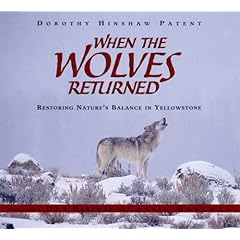
Dorothy Patent's book, When the Wolves Return: Restoring Nature's Balance in Yellowstone, is an IRA Teachers’ Choice winner for 2009. Her current project is a book on the relationships between Indians and horses through time.

My Photo Preview this bookPreview this bookTwo of Vicki Cobb's books from her new Millbrook series, Your Body Battles a Cold and Your Body Battles a Broken Bone, were named as Junior Literary Guild Selections for Spring 2009.

for more: I.N.K. Kathleen Krull

Saturday, April 4, 2009

Imagine a Dragon Ages 7-9


You might think Imagine a Dragon would be collection of fluffy poems going nowhere special, but you’d be wrong. Instead, esteemed science writer Laurence Pringle has compiled a treasury of true stuff about this beast, illustrious but wholly imaginary. Starting with the earliest rumors in China, Egypt, and present-day Iraq, a dragon worked nicely as an explanation for natural disasters, scientific phenomena, anything that seemed scary. Pringle zooms around the globe to glean the primo dragon facts and legends, while lush paintings in acrylic by Eujin Kim Neilan make the pages swirl. Good example of a handsome nonfiction picture book, and an appealing choice for kids shifting out of fairy tales (Boyds Mills, 2008, ages 7, 8, 9). FROM:

The Way We Work: Human Body - Ages 10+


It’s surely the nonfiction event of the year—David Macaulay’s The Way We Work: Getting to Know the Amazing Human Body. No wonder he won a “genius grant” from the MacArthur Foundation, which in part allowed him to complete this 336-page event, I mean book. Really, all you can say is “wow”—at the structural magnificence that is the human body and at Macaulay’s dramatic, clear drawings conveying every detail. Like a 21st-century Leonardo da Vinci, though presumably without the real corpses, he gets inside us and dissects like mad, and not for his own edification (like Leo), but ours. This tome has tremendous amounts of info, boiled down to its essence, and obviously thoroughly vetted by experts. Kids who persist with the somewhat textbook-y text, co-written with Richard Walker, will learn how we pick up an apple, breathe, think, blink, digest, reproduce, and everything else the body does. To me the most interesting of the seven chapters was “Battle Stations,” about the way we try to fight off flu and other threats. I would think this book would be of special interest to kids who have had anything go wrong with their bodies, but it's also a gift for budding biologists, and anyone who likes to browse (Walter Lorraine/Houghton Mifflin, ages 10, 11, 12, 13, 14, 15, 16, 17, 18). FROM:

Nonfiction Writing: From the Inside Out

In deciding which new nonfiction books to urge for the holidays, I’m squeezing my thoughts into one mother-of-all-recommendations: Nonfiction Writing from the Inside Out: Writing Lessons Inspired by Conversations with Leading Authors (Scholastic).

Usually, the teaching of writing emphasizes fiction and poetry, all well and good, but it’s expository writing that takes the cake in real life. The entire nonfiction writing process-- how to organize, research, think about a topic, find a voice, convince or inform-- these are skills that will carry students through life, helping them to be clear-thinking citizens and better at whatever career they pursue.

The author of this book, Dr. Laura Robb, has been a noted teacher for over forty years. I can’t say enough about the book—it’s the best possible gift for teachers, librarians, parents, anyone who wants their children to be able to write clearly. She details, step by illuminating step, how to get kids to write essays, plus book reports, diaries, interviews, letters, indeed any kind of creative writing that calls for persuasiveness and simplicity. As Dr. Robb writes, “We must help our student writers find their voices and approach nonfiction writing as an exciting craft they will want to fine-tune throughout their lives.” Her book is one savvy way of helping students open that door to becoming lifelong learners.

And I swear I’m not pushing it because she interviewed me. The authors from whom she gleans pointed tips about what makes good writing tick include Russell Freedman, Kathryn Lasky, Walter Dean Myers, James Cross Giblin, and a gaggle of other professionals.

Happy holidays, Laura Robb and all such dedicated teachers.

Interesting Nonfiction for Kids

I.N.K.: Interesting Nonfiction for Kids


Here we will meet the writers whose words are presenting nonfiction in a whole new way. Discover books that show how nonfiction writers are some of the best storytellers around. Learn how these writers practice their craft: research techniques, fact gathering and detective work. Check out how they find unusual tidbits, make the facts interesting and write something kids will love to read. Explore how photos and illustrations are integrated with the text to explain an artist's vision of the world. Consider what subjects are flooding the market and what still needs a voice. Rethink nonfiction for kids.

Kathleen Krull BLOG

She is the author of the
LIVES OF Books

Snowflake Bentley

Front Cover
By Jacqueline Briggs Martin
Illustrated by Mary Azarian
Edition: illustrated
Published by Houghton Mifflin, 1998
ISBN 0395861624, 9780395861622
32 pages
A biography of a self-taught scientist who photographed thousands
of individual snowflakes in order to study their unique formations.

See the Snowflake Crystals


http://snowflakebentley.com/


Wikipedia

Critical Review of Illustrations

Snowflake Bentley

on-line unit: http://www.eduscapes.com/caldecott/99a.html

other on-line resources for snowflakes:

http://www.teelfamily.com/activities/snow/science.html

Caldecott Award

Each year a Caldecott Medal, named in honor of English illustrator Randolph J. Caldecott, goes to the artist of the most distinguished American picture book for children published in the United States during the preceding year. The American Library Association sets the criteria by which a committee views and judges children’s picture books each year. The committee members consider (American Library Association:

- excellence of execution in the artistic technique employed.

- excellence of pictorial interpretation of story, theme, or concept; of appropriateness

of style of illustration to the story, theme, or concept; of delineation of plot, theme,

characters, setting, mood, or information through the pictures.

- excellence of presentation in recognition of a child audience. (p. 2)

Using this list as a measuring stick, it surprises few that Mary Azarian won this year’s Caldecott Award for her outstanding artwork in Snowflake Bentley (1998). Jacqueline Briggs Martin’s eloquent portrayal of the life of Wilson Bentley, noted authority on snowflakes, provides the perfect prose for Azarian’s colorful woodcut art form. The pictorial interpretation of the story complements Martin’s description of the rural landscape of Vermont as it looked in the late 1800's. Simple, detailed illustrations provide the visual beauty of this book. Woodcuts give a flavor of times past and emphasize line and structure. The framed borders reflect the beauty of snowflakes as Martin describes them to the reader and also provide space to include bibliographic information about Bentley that might have slowed the text down too much for children to enjoy.

Cleverly done illustrations portray the literary elements of a picture book. To judge the worthiness of Azarian’s work in Snowflake Bentley, a look at the way she portrays these elements helps us make sound judgements about the true quality of the illustrations. The illustrations in this award-winning book reflect character, plot, theme, setting, point of view, style, and tone.

Azarian’s portrayal of characters in this book compliments Martin’s description of Bentley, at various stages in his life, his parents, and his friends. On the first page of the book, Martin describes the difficult life of a farmer who must do his work with an ox and sled. Azarian chooses to depict a stoop-shouldered figure coming from a barn in the dark with only a hand-held lantern to light his way as he walks back to the warm glow of the yellow window-lights of his home. The deep snow surrounding the farmer parts way to leave him only a narrow path by which to walk to his house. The lantern lets readers know that the snow’s true color reflects white, but the surrounding snow appears to have a blue-gray tint, alerting the reader to the fact that no artificial street lights exist on this farm. From the very first page readers know something about the farmer holding the lantern.

Azarian’s characters appear robust, round, and solid looking. The clothes they wear seem appropriate for the time in history that this story takes place. Rosy cheeks and smiles let the readers know that little turmoil surrounds the family in this story. Illustrations of Bentley as he reaches adulthood make him look very much like his father. A strong feeling of "family" permeates the text and the accompanying illustrations. Facial expressions on Bentley’s mother suggest demureness and worry lines on his father’s face imply concern and a feeling of disconcertedness. Bentley’s youthful face reflects joy and wonder when he works with his snowflakes, cameras, and as he shows his parents what he discovers.

Azarian’s illustrations also add to the plot of this story. From observing the second page of this book, readers can tell much from the open arms of Bentley as he welcomes the snowflakes onto his mittens. The abundance of snow in this scene reinforces the text in declaring that 120 inches of snow fall occurs here every year. Without words in this text, readers would know that Bentley loved nature, as depicted in the illustrations of him gently holding a butterfly, Bentley bringing his mother apple blossoms, his intent work with a grasshopper, and his constant fascination with snow. Perhaps the most gripping portrayal of plot comes at near the end of the book as Bentley seems "lost" in a blizzard of snow. Azarian depicts Bentley walking away from us into oblivion, his footsteps disappearing behind him.

The theme of this book seems to suggest that people should follow their passion, regardless of what other’s may think or how impossible it may seem (Azarian, 1999). Subordinate themes might suggest the merits of a supportive family and of hard work toward reading a goal. Azarian chooses to show us Bentley depicted as an outsider as he walks past his friends building a fort, to pursue his passion. Other important illustrations relating to theme show Bentley explaining the camera he wants to his mother and his parents discussing the impracticality of such a purchase.

We see Bentley in complete solitude as he works with his microscope and his drawing of snowflakes, suggesting how lonely and long the nights might seem to those pursuing a dream.

Azarian uses all the tricks up her sleeve to bring us the setting in this book. This seems the most powerful story element portrayed by the artist. Azarian’s use of line appears consistent throughout the book. Horizontal and vertical lines meeting at right angles suggest stability. Doorways, panels on doors, paneling, window frames, flooring, and sideboards all indicate to the reader that a sense of security and permanence exists in this story. The artists use of color with muted shades of white, blue, and gray give character to the snow in all phases of the snowfalls. The farm and farmhouse appear inviting and summon the reader to a simpler place and time. Warm colors used inside the house suggest comfort and assurance. We can tell from the illustrations in this book that the place where Wilson Bentley grew up provided him an ideal place to grow and dream. Azarian’s depiction of the setting in this story initially "grabs" the reader and the images stay with the reader long after the book closes.

The point-of-view that Azarian takes in her illustrations matches that of the author, third person. Readers are invited inside Bentley’s home and his dream as the author and illustrator work together to make readers informed observers. Looking at the illustrations in this book mimics browsing through a Bentley family album of snapshots of their lives.

Azarian’s style and tone of illustration in this book plays heavily on realism. People, buildings, and animals appear in proportion to the surroundings. Very calm pictures match informative and straightforward text to tell Bentley’s life story. Openness and honesty flow both from the text and the illustrations in this book.

The very effective pictures in this book enhance and compliment the text. Children will love a book about snow, but on the surface the story of a man who thought of little else seems less than compelling. Azarian lets children feel the snow, feel the passion, and sense that a dream pursued can provide a fulfilling life. We get the emotional context of this story from Azarian’s talented portrayal of the elements that make a story worth telling.

Bibliography

American Library Association. ALSC: Caldecott medal descriptors, history, & criteria. On-line:

Azarian, M. (1999). Caldecott medal acceptance. The Horn Book Magazine, 75(4), pp. 423-429.

Thursday, April 2, 2009

Gotcha for guys!: nonfiction books to get boys excited about reading

Preview this book
By Kathleen A. Baxter, Marcia Agness Kochell
Edition: illustrated, annotated
Published by Libraries Unlimited, 2007
ISBN 159158311X, 9781591583110
269 pages
Research indicates boys are interested in reading nonfiction
materials, yet most children's librarians prefer to booktalk fiction.
Offering citations for more than 1,100 books, Gotcha for Guys!
deals specifically with books to pique the interest of middle grade boys.
A series of booktalks are grouped within chapters with like titles
such as: "Creepy-Crawly Creatures," "Disasters and Unsolved Mysteries,"
"Action and Innovation," and "All Things Gross."
Complete booktalks are presented in a beginning section of chapters 1-9.
A second section in each of these chapters contains short
annotations and talks for other books of interest,
and a third section offers lists of well-reviewed titles to consider for boys.
The book is enhanced with book cover art and reproducible lists
for teachers and librarians.

Contents

1
Hitler Youth , Chiune Sugihara , Candlewick Press
23
African American , Freedom Riders , Kid Blink
51
Pterosaur , John Bindon , Feathered Dinosaurs
67
Kids Can Press , Science Verse , HarperCollins
95
mummies , Grossology , Zahi Hawass
112
White Sharks , Grades K-3 , naked mole rats
159
Minibeasts , Komodo Dragon , Africanized bees
175
Inside the NFL , X-treme Sports , Half-Pipes
205
Forensic Files , H.L. Hunley , Roanoke Colony
223
Ripley's Believe , Harpster , Ed Emberley
233
National Geographic Society , Sandra Markle , Publications Company
243

251
Triceratops , Dan Greenberg , Tyrannosaurus

Kids Can Press, Sandra Markle, HarperCollins, Grades K-3, National Geographic Society, Zahi Hawass, Mummies, Pterosaur, H.L. Hunley, Inside the NFL, Gotcha Again, Candlewick Press, Atheneum Books, White Sharks, Grades 4-up, Lerner Publishing, Ed Emberley, Grossology, Science Verse, Heinemann Library

Gotcha!: nonfiction booktalks to get kids excited about reading

Preview this book
By Kathleen A. Baxter, Marcia Agness Kochel
Edition: illustrated
Published by Libraries Unlimited, 1999
ISBN 1563086832, 9781563086830
183 pages
Thousands of children's books are published each year
-some are outstanding, while others are not.
This book makes it easier for you to find the best
in children's nonfiction books, and it offers concrete,
classroom-tested ideas for presenting them to students
in irresistible ways. Booktalks for more than 350
nonfiction titles (appropriate for elementary
and middle school students) are organized according
to topics popular with young readers
-"Great Disasters," "Unsolved Mysteries," "Fascinating People,"
"Science," and "Fun Experiments to Do." In addition,
there are tips on booktalking, an outline for a booktalk program,
and a bibliography that can be used for collection development.
Appropriate grade levels for each book are cited.
Library Media Specialists will find this guide essential.
The thematic approach helps teachers search for titles
that correlate to curriculum areas or specific units of study.
Parents can use the book with their children
as a reading selection tool. Anyone who works
with young children will find this book an invaluable resource.

Contents
2
Donner Party , Pompeii , Atocha
21
mummies , Jack Prelutsky , Ankylosaurus
41
dinosaurs , Harp Seal , lemurs
73
UFOs , Amelia Earhart , Yeti
89
Warren Faidley , Skara Brae , Spencer Christian
112
African American , Laura Ingalls Wilder , Peg Kehret
Our Wonderful Terrible Past
141
African American , Underground Railroad , Rhoda Blumberg
173

6
dinosaurs , Harp Seal , Underground Railroad

100 Most Popular Children's Authors: Biographical Sketches and Bibliographies

Front Cover
By Sharron L. McElmeel
Edition: 5, illustrated
Published by Libraries Unlimited, 1999
ISBN 1563086468, 9781563086465
495 pages
Students can learn more about their favorite authors
and find plenty of reading materials they'll enjoy
with this affordable biographical work and ready-reference.
Featuring 100 beloved and celebrated children's book authors,
McElmeel offers engaging biographical sketches, photos,
and selected bibliographies and lists of related information sources.
Included are such long-time luminaries as Beverly Cleary
and Marguerite Henry as well as many new emerging writers.
McElmeel's focus is on contemporary authors
and those whose works are still in print. A more current
and affordable alternative to multivolume publications,
this book is a great collection development tool and
resource for author studies. Students will enjoy using it
for their reports and research papers.

Reviews

Gr 6-9-This handy resource provides
fairly extensive biographical information about writers enjoyed by elementary and middle school children. Authors of contemporary and classic novels and nonfiction titles are included. For each entry, several pages of background are followed by a selective, sometimes annotated book list of the person's works and several titles for further reading. This inconsistent use of annotations is bothersome. Occasional Web sites are also given. Clearly, depth of coverage can't be as complete as the multivolume Something about the Author (Gale) or the Biography Today: Author Series (Omnigraphics), but McElmeel more than adequately covers each writer's life and work. "Most popular" is always open to interpretation, and obviously not everyone will agree with this designation. Many of the writers are also found in Bernard Drew's The 100 Most Popular Young Adult Authors (Libraries Unlimited, 1997). There are black-and-white photos of fewer than half the entries. Helpful genre and general indexes conclude the volume. For libraries owning any of the biographical sets, this is not a first purchase. However, its accessible format will make it the preferred title to answer general questions. Useful for collections serving teachers and students.-Peg Glisson, Mendon Center Elementary School, Pittsford, NY

Wednesday, April 1, 2009

Children's authors and illustrators too good to miss: biographical sketches and bibliographies

Preview this book
By Sharron L. McElmeel
Published by Libraries Unlimited, 2004

Contents

6
Mary Azarian , Haemi Balgassi , Snowflake Bentley
20
Cynthia Leitich Smith , Bynum , Buzzeo
Carlson
36
Vicki Cobb , Lisa Tucker , Hyperion
Sharon Creech
51
Sharon Creech , Christopher Paul Curtis , Walk Two Moons
Karen Cushman
64
Kate DiCamillo , Karen Cushman , Tale of Despereaux
Marianne J Dyson XI
81
Robert Florczak , Everything Book , NASA
Debra Frasier
94
Frasier , Vero Beach , Blintzes
Dan Gutman
109
Dan Gutman , Greenwillow , Gary Hines
Will Hobbs
124
Barbara LaVallee , Betsy Lewin , Santa Fe Trail
Jackie French Koller
138
Dragonling , Ethiopia , Jackie French Koller
E B Lewis
154
Linda Sue Park , Pat Mora , Seesaw Girl
Nicole Rubel
168
Rotten Ralph , Jack Gantos , Esperanza Rising
April Pulley Sayre
183
Army Ant , Secrets of Sound , Superhero
David Shannon
187
Cynthia Leitich Smith , David Shannon , Saved Baseball
Chris Soentpiet
204
Simms Taback , Chris Soentpiet , Sholom Aleichem
Deborah Wiles
220
Deborah Wiles , Vicki Cobb , Freedom Summer
GenreTheme Index
234
Iowa Reading , Literacy , literature


The ABC's of writing for children: 114 authors & illustrators talk about the art, business, craft, & life of writing children's l

Preview this book
By Elizabeth Koehler-Pentacoff
Edition: illustrated
Published by Quill Driver Books, 2002
ISBN 1884956289, 9781884956287
341 pages

Have you ever dreamed of writing a best-selling
children's book? Ever fantasize about what
it's like to live the life of a published children's author?
Although writing and illustrating books for children
is not as easy as it looks, new authors and
illustrators are being discovered--and published
--all the time. Even if you're not planning a career
in this field, learning how authors and illustrators
work can lend new insights and appreciation
to their art. The same ideas and inspirations
that help authors and illustrators of children's books
may encourage students, teachers, librarians and other
creative artists in their literary efforts. In
The ABCs of Writing
for Children,
you'll learn many ‘do's and don'ts' for creating
children's books. You'll see that what works for one
author may not work for the next. No matter what your
aspirations are, whether you want to enrich your reading,
teach others to read and write more deeply, or nurture your
own creative process, learning what works for others may
work for you. Including Chris Crutcher, Karen Cushman,
Sid Fleischman, Richard Peck, R. L. Stine,
Rosemary Wells, and Jane Yolen.

Terrific connections with authors, illustrators, and storytellers: real space and virtual links


Preview this book
By Toni Buzzeo, Jane Kurtz
Published by Libraries Unlimited, 1999
ISBN 1563087448, 9781563087448
185 pages
Successful visits in real space and in cyberspace
are described, giving you specific ideas of the many
ways to create meaningful links between bookpeople
and students. Choosing the right guest, guidelines
for successful visits, making curriculum connections,
contacting bookpeople via e-mail, live chats in virtual space,
taking advantage of ITB and satellite technology, and using
such props as realia and curriculum guides are
some of the topics covered.

Key terms