Showing posts with label Award-Winning. Show all posts

Monday, April 27, 2009

2008 Read Aloud Award When Dinosaurs Came With Everything Ages 3-8

PREVIEW
Get a WHAT!?

Free WHAT!?

DINOSAURS?

Just when a little boy thinks he's going to die of boredom from running errands with his mom, the most remarkable, the most stupendous thing happens. He discovers that on this day, and this day only, stores everywhere are giving away a very special treat with any purchase. No, not the usual lollipop or sticker. Something bigger. Much, MUCH bigger. It's a dream come true, except...what exactly do you do with these Jurassic treats? And how do you convince Mom to let you keep them?

When Dinosaurs Came with Everything
By Elise Broach, David Small
Illustrated by David Small
Edition: illustrated
Published by Simon and Schuster, 2007
ISBN 0689869223, 9780689869228
40 pages
What if one day every merchant in town ...
... offered up, and indeed, insisted that shoppers take home a live dinosaur (free) with every purchase? That's what happens to a boy and his mother in this sweet, absurd story that unfolds very much like a dream—or a nightmare, depending on the reader's perspective on having a large dinosaur as a pet. In Small's comical, wonderfully expressive watercolor-and-ink drawings, it's easy to identify the mother's reaction to the bonus triceratops (free with a dozen doughnuts); stegosaurus (from the doctor instead of stickers); and pterosaur (from the barber instead of the usual balloon): unmitigated horror, inversely proportionate to her son's delight. The hulking beasts are irresistibly endearing, though, as they wait patiently, doglike, for their new owners outside all the town establishments and ultimately, once at home in the family's backyard, prove their worth as household laborers, cleaning gutters and rescuing far-flung Frisbees. In the end, the boy's friends bring their own newly acquired dinos over to his house for a poolside party—and he knows Mom has truly come around when she calls the baker for more doughnuts. (Picture book. 4, 5, 6, 7)
Kirkus Reviews Copyright (c) 9/25/2007 VNU Business Media, Inc.
PreS-Gr 1 Age 3, 4, 5, 6 — In a playful take on the ...
... stickers and lollipops that bored kids sweep up at businesses as parents do errands, Broach imagines what would happen if a dinosaur were the giveaway of the day. A boy's increasing delight at the freebies he collects from the bakery, the doctor, and barber contrast with his mother's increasing panic and dismay as the lumbering beasts start to accumulate. When they acquire the fourth behemoth, Mom decides that the errands are done and whisks everyone home. Once there, she finds some unique ways to put the stegosaurus, triceratops, hadrosaur, and pterosaur to good use doing household chores. Small's sketchy, tongue-in-cheek watercolor-and-ink artwork perfectly captures the boy's exuberance, the dinosaurs' mass, and the hubbub that a city full of these reptiles would create. Dinosaur lovers will enjoy seeing their favorite creatures pictured and named, though the book's appeal won't just be for them. Both listeners and independent readers will appreciate the humor in the text, and the book will spark imaginations and discussions on what else might make great giveaways.—Marge Loch-Wouters, Menasha Public Library, WI

2009 List of Books Nominated for the E. B. White Read Aloud Award

Read Aloud 2004 Award SkippyJon Jones Ages 4-8

2004 Winner

SkippyJon Jones, by Judith Byron Schachner PREVIEW

Unique, quirky and memorable, SkippyJon Jones is chock-full of rhyme and rhythm. A Siamese kitten, who imagines himself to be a Chihuahua and a sword fighter - anything except an ordinary cat - is the star of this book. The story takes young readers on a wild ride in which they can't help but join along with sing-along songs and chants. Peppered with Spanish expressions and full of energized fun, SkippyJon Jones is not only entertaining for the listener, it's also enjoyable for the reader.

Judith Byron Schachner has been illustrating and writing children's books since 1992.She has illustrated many of her own stories as well as those written by others. Her artwork has been called "absolutely delightful" by School Library Journal. In 1999, her book Mr. Emerson's Cook was among the Carolyn Field Notable Books.

To find out more about Judith Schachner, visit her web site.

From School Library Journal
Kindergarten-Grade 3 Ages 5, 6, 7, 8, 9 -This is a wildly wonderful book about a hyperactive kitten, Skippyjon Jones, whose head and ears are too big for his body, and whose imagination is too intense for his mama. According to her, he needs to do some serious thinking about what it means to be a Siamese cat instead of a bird (Skippyjon always wakes up and eats worms with his feathered friends). She sends him to his room, where he imagines he is a Chihuahua ("My name is Skippito Friskito./I fear not a single bandito"). Chock-full of rhyming chants and Spanish expressions, the feline's adventure as a doggy Zorro ends in chaos. His frazzled mother gives him a hug anyway and says, "Say good night, Skippyjon Jones." "Buenas noches, mis amigos," says the kitten, as he bounces on his bed all ready for another adventure. The buoyant and colorful cartoon illustrations match the exuberant text perfectly. Spanish-speaking children will be especially delighted by the words and humor; others may be a little bewildered by all of the foreign phrases and will need some explanation, but the story definitely has the potential of a fun read-aloud. A good multicultural offering.
Judith Constantinides, formerly at East Baton Rouge Parish Main Library, LA
Copyright © Reed Business Information, a division of Reed Elsevier Inc. All rights reserved. --This text refers to the Hardcover edition.

Read Aloud Winner 2005 Wild About Books Ages 4, 5, 6, 7, 8

2005 Winner

Wild About Books
By Judy Sierra and illustrated by Marc Brown

Wild About Books is a rollicking rhymed story of Molly the librarian who accidentally drives her bookmobile to the zoo and introduces the birds and beasts to a new something called reading. Molly finds the perfect book for each animal --- tall books for giraffes, small books for crickets, joke books for hyenas - and has them going "wild, simply wild, about wonderful books." Author Judy Sierra combines clever prose with laugh-out-loud book selections for the animals:

"She even found waterproof books for the otter,
who never went swimming without Harry Potter."

Judy Sierra is renowned for her funny and brief retellings of folktales, most recently in the delightful collection of Silly and Sillier. Equally adept at rhyme, she wrote a collection of amusing poems about penguins, Antarctic Antics, which was a bestseller. Ms. Sierra devotes considerable time to storytelling and reading to children at schools and libraries, endeavors that help her know exactly what makes children laugh. Judy lives in Castro Valley, California. Click here to visit Judy Sierra's web site.

A rollicking, loving tribute to Dr ...
.... Seuss (to whose memory this is dedicated) and to books and libraries. Here's a rhyme that works, without clunking but with inspired silliness in the best Seussian meter. Librarian Molly McGrew, resplendent in hot-pink trousers and a tropical striped jacket, drives the bookmobile into the zoo, with delightful results. The animals become fascinated by reading, and by words, and she strives to satisfy them: tall books for the giraffes—titled Skyscrapers, Redwoods, and Basketball in Brown's clever take—books in Chinese for the pandas, "And llamas read dramas while eating their llunches." The insects write haiku, critiqued by the scorpion—not only a lesson in verse, but quite hilarious: the Dung Beetle writes: "Roll a ball of dung— / Any kind of poo will do— / Baby beetle bed." The scorpion sniffs, "Stinks." Brown's paintings, rich in pattern and detail and wonderful color, show graceful, cheery animals. A storytime spectacular. (Picture book. 4, 5, 6, 7, 8)
Kirkus Reviews Copyright (c) VNU Business Media, Inc.
PreS-Gr 2-In a rhyming text that is both ...
... homage to and reminiscent of Dr. Seuss's epic rhyming sagas, Sierra spins the tale of librarian Molly McGrew who mistakenly drives the bookmobile to the zoo. The various denizens are attracted to her read-alouds and soon are reading, writing, rhyming, and going wild about those wonderful books. With Molly's encouragement, the animals start their own Zoobrary so they can read to their hearts' content. Sierra's text has a wacky verve and enough clever asides and allusions to familiar characters to satisfy bibliophiles of all ages. The author's sense of playfulness in plot and language ("llamas read while eating their llunches"; a hippo wins the "Zoolitzer Prize") creates a lavish literary stew. Comic moments abound, including bugs writing haiku and unruly bears licking illustrations right off the page (until Molly gently teaches them how to treat books properly). Brown's cheerful, full-color illustrations stretch his trademark art with ever-so-slightly stylized spreads that are rich in pattern, texture, and nuance. On each spread, he plays with perspective and layout to create an electric sense of excitement as the animals discover what kids have known for a long time-reading is fun!-Marge Loch-Wouters, Menasha's Public Library, WI

2006 Read Aloud Award If I Built a Car Ages 4, 5, 6, 7, 8

2006 Winner, Picture Books

If I Built a Car, by Chris Van Dusen
$15.99 Penguin Young Readers Group PREVIEW

Young Jack is giving an eye-opening tour of the car he'd like to build. There's a snack bar, a pool, and even a robot chauffeur named Robert. With Jack's soaring imagination in the driver's seat, readers are off on a wild ride of imagination!

Chris Van Dusen's interest in art began at a young age when his mother gave hiim and his four brothers pencils and paper to keep them busy. After high school, Chris pursued his interest in art by studying painting and illustration at the University of Massachursetts at Dartmouth, graduating in 1982 with a BFA. In 1985 he returned to Maine and settled in the coastal town of Camden. He is also the auhtor of Down to the Sea wit Mr. Magee, and A Camping Spree with Mr. McGee. In his spare time, Chris likes to hike and bike all over the Maine coast with his family. Click here to visit Chris Van Dusen's web site.

From School Library Journal
PreSchool-Grade 2-With descriptions and a rhyme scheme clearly inspired by Dr. Seuss, a little boy relates all of the wonderful things about the car he plans to design, including safety features, a pool, a robot driver, and the ability to go underwater and fly through the air. The rhyme scheme works well enough, although at times the rhythm falters. The artwork is the real draw here. The brightly colored, crisp, cartoon-style illustrations, reminiscent of the Jetsons, are likely to keep viewers' attention. The full-bleed pictures are animated and detailed, and the boy's dog, which appears in each picture, ties the images together nicely. This slight story may attract young fans of vehicles, but readers looking for a plot will be disappointed in what is essentially an extensive laundry list of the automobile's attributes.-Amy Lilien-Harper, The Ferguson Library, Stamford, CT
Copyright © Reed Business Information, a division of Reed Elsevier Inc. All rights reserved. --This text refers to the Hardcover edition.

From Booklist
K-Gr. 2. A young boy decides to design a better car than the old family station wagon. Driven by a robot, his sleek, supercharged vehicle can drive underwater and fly, and the interior includes a snack bar and swimming pool. The story is told in jaunty rhyming couplets, but the fun really comes from the illustrations, which perfectly parody 1950s' visions of the future, as depicted in such magazines as Popular Mechanics. The car glides past neat suburban homes with wide and perfect lawns, where everything is bathed in pastels. This may appeal more to parents (or, perhaps more accurately, to grandparents) who remember these renderings of technological dream worlds. Still, children will enjoy the exuberance and goofiness of the double-page spreads, such as the close-up of the expansive snack bar, which dispenses burgers, fries, and Cheez Whip on command. Todd Morning
Copyright © American Library Association. All rights reserved --This text refers to the Hardcover edition.

ABC Read Aloud Award Winner 2007 Alabama Moon Ages 9-14

Winner - 2007 E.B. White Read Aloud Award For Older Readers

Alabama Moon
by Watt Key
$16.00 Farrar, Straus & Giroux Ages 9, 10, 11, 12, 13, 14 PREVIEW

I could trap my own food and make my own clothes. I could find my way by the stars and make fire in the rain. Pap said he even figured I could whip somebody three times my size. He wasn't worried about me.

For as long as ten-year-old Moon can remember, he has lived out in the forest in a shelter with his father. They keep to themselves, their only contact with other human beings an occasional trip to the nearest general store. When Moon's father dies, Moon follows his father's last instructions: to travel to Alaska to find others like themselves. But Moon is soon caught and entangled in a world he doesn't know or understand, apparent property of the government he has been avoiding all his life. As the spirited and resourceful Moon encounters constables, jails, institutions, lawyers, true friends, and true enemies, he adapts his wilderness survival skills and learns to survive in the outside world on his own terms.

From the Committee:
Described by one ABC bookseller as Hatchet meets Holes, the committee loved this coming of age novel for its freshness of voice, originality, and blend of humor and drama. Tested by several of the committee members on target audiences, the language and pacing of the book made it a great read-aloud that grabbed listeners' attention and didn't let go.

From School Library Journal
Grade 6-8, Ages 12, 13, 14–Moon, 10, has spent most of his life in a camouflaged shelter in the forest with his father, a Vietnam veteran who distrusts people and the government. Pap has educated him in both academics and survival skills. His life suddenly changes when the land is sold to a lawyer and his father dies. The lawyer discovers him and, believing what he is doing is best for the child, turns him over to Mr. Gene from the local boys home. When Moon escapes, Mr. Gene alerts the constable, an emotionally unstable bully who becomes obsessed with capturing him. Once at the home, though, Moon makes his first real friends and learns what friendship is all about. Much of the story revolves around multiple chases, captures, and escapes. The ending might be a bit too perfect, but it is a happy one for Moon. The book is well written with a flowing style, plenty of dialogue, and lots of action. The characters are well drawn and three-dimensional, except for the constable–but then, maybe thats all there is to him. Even those who knew him as a child have nothing good to say about him. The language is in keeping with the characters personalities and the situations. Although Moon is only 10, older readers will also enjoy the book and will better understand the adults perspectives.–Nancy P. Reeder, Heathwood Hall Episcopal School, Columbia, SC
Copyright © Reed Business Information, a division of Reed Elsevier Inc. All rights reserved. --This text refers to the Hardcover edition.

From Booklist
*Starred Review* This excellent novel of survival and adventure begins with the death of young Moon's father, an antigovernment radical who has been living off the land in rural Alabama with Moon for years. Moon has never known any truth but his dad's, and so he tries to continue his father's lifestyle. Unfortunately, Moon quickly finds himself in the claws of civilization, as personified by a sadistic cop. After a brief stint in jail (a lifetime of hunting and gathering leaves Moon hilariously pleased with the prison food), Moon again lights out for the territories, only to be recaptured and end up in reform school. Of course, no reform school is gonna keep Moon in check. Key's first novel is populated with memorable characters--such as Moon's reform-school buddy's dad, whose life is devoted to drinking and shooting machine guns--and studded with utterly authentic details about rural Alabama and survivalism. Stylistically, the book is perfectly paced, and Moon's narration is thoroughly believable. A terrific choice for reluctant readers and also for fans of Gary Paulsen's Brian novels. Ilene Cooper
Copyright © American Library Association. All rights reserved --This text refers to the Hardcover edition.

ABC Read Aloud Award Winner 2007 Houndsley and Catina Ages 5-7 Aloud, Ages 7-10 Alone

Winner - 2007 E.B. White Read Aloud Award For Picture Books

Houndsley and Catina
By James Howe
llustrated by Marie-Louise Gay
$14.99 HC / $4.99 PA
Candlewick Press

Catina wants to be a famous writer. Houndsley is an excellent cook. Catina thinks Houndsley is a wonder. Houndsley thinks Catina is a very good friend. So what should Houndsley say about Catina's seventy-four-chapter memoir? And can Catina find the right words of comfort for Houndsley after the big cooking contest fiasco? James Howe's funny and endearing world of ginger tea, no-bean chili, and firefly watching is brought to life in cozy watercolors by Marie-Louise Gay in this tender chapter book about what it means to be friends.

From the Committee:
Although this book falls in the Early Reader category, the committee chose this book as the recipient of the E.B. White Read Aloud Award for Picture Books because of the wonderful relationship between James Howe's writing and Marie-Louise Gay's illustrations. Committee members felt that the lovely relationship between the two main characters was an evocative update on classic friendship stories like Frog and Toad and George and Martha.

From School Library Journal
Kindergarten-Grade 2 Ages 5, 6, 7 Catina, who has just completed Life Through the Eyes of a Cat, looks forward to winning prizes and being famous. Houndsley thinks that the book is terrible, but spares her feelings by telling her that her writing leaves him speechless. He is such a good cook that Catina and their friend Burt convince him to enter a cooking contest, but he is so nervous that he undercooks the rice and leaves out the beans in his three-bean chili. In the end, Houndsley realizes that he is happy to experience the joy of cooking; he can live without fame, and Catina confesses that she does not enjoy the process of writing. Houndsley suggests that she can be famous for something else and tells her that she is good at being a friend. Catina purrs: Being your friend is better than being famous. Gay presents distinctive watercolor, pencil, and collage illustrations in varying layouts to illuminate the story. The dog and cat exude emotion and motion in modest, vintage homes and beautiful outdoor settings. This intimate look at friendship is a welcome addition to series such as Arnold Lobel's Frog and Toad (HarperCollins) and Elissa Haden Guest's Iris and Walter (Harcourt). Laura Scott, Farmington Community Library, MI
Copyright © Reed Business Information, a division of Reed Elsevier Inc. All rights reserved.

From Booklist
Gr. 2-4 Ages 7, 8, 9, 10, younger for reading aloud. Catina (a cat) and Houndsley (you guessed it, a dog) are best friends, and they encourage each other as best friends do. Houndsley is mortified when he reads his friend's novel-in-progress, and realizes that Catina has little writing talent. "I'm at a loss for words," he finally musters, satisfying Catina, who seems focused on literary prizes and fame instead of the actual writing. Then Catina encourages Houndsley to enter a cooking competition, and he's so nervous that he fouls the recipe and endures the judges' mockery. Together the friends confess that, rather than simply enjoying their activities, they secretly wanted to become famous. This early chapter book, while emphasizing doing what you love, not what will bring acknowledgment, is heavy-handed. But it will still hit home with kids just learning about their own particular talents and passions, and the lively, brisk writing is wonderfully extended in Gay's airy watercolor-and-pencil illustrations, which keep the focus on the caring friends. Gillian Engberg
Copyright © American Library Association. All rights reserved

The E. B. White Read Aloud Awards


The Association of Booksellers for Children's E. B. White Read Aloud Awards are a series of Web Pages from September 2, 2004 through December 18, 2007 which are now available through the Way Back Machine of webarchive.org.

Here is the link to the list of them: http://web.archive.org/web/*/http://www.abfc.com/ebwhite.html

Websites of Awards for Childrens Books

Here are websites where you will find complete lists of:

The Caldecott titles

The Newbery titles

The Golden Kite Award titles

The Boston Globe-Horn Book Award titles

The Kate Greenaway Award titles

The Carnegie Award Winning Titles

The Book Sense Best Children's Book Award titles

The Scott O’Dell Award For Historical Fiction

The E. B White Read Aloud Award

Through the Looking Glass Reviews of Award-winning Books

THROUGH THE LOOKING GLASS CHILDREN'S BOOK REVIEW
An Online Children's Book Review Journal
This link is for Award Winners
http://www.lookingglassreview.com/html/award_winners.html

Friday, April 10, 2009

Sophie's Masterpiece Storyline Online AudioBook

Sophie's Masterpiece: A Spider's Tale
By Eileen Spinelli, Jane Dyer
http://www.storylineonline.net/
Illustrated by Jane Dyer
Edition: illustrated
Published by Simon & Schuster Books for Young Readers, 2001
ISBN 0689801122, 9780689801129
32 pages
Sophie's no ordinary house spider. She's an artist; and every web she spins is more wondrous than the one before. But don't mention that to the guests at Beekman's Boardinghouse, because they don't like spiders. No one there wants anything to do with Sophie or her magnificent creations -- no one except the woman on the third floor. She's a new mother "weaving" something herself; and when she runs out of yarn, Sophie knows the time has finally come to create the masterpiece of a lifetime.

Eileen Spinelli and Jane Dyer, the award-winning duo who created the best-selling When Mama Comes Home Tonight, team up once again to tell the charming and bittersweet tale of an exceptionally gifted spider and the lengths she's willing to go to share her gifts with those around her.

The creators of When Mama Comes Home ...

... Tonight (1998) weave another affecting tale, in which a gentle, eight-legged artist spends her last strength on a gift to a newborn baby. Though Sophie's ingeniously patterned webs are the delight of her Mama and playmates, when she moves into a drab boarding house, its residents react to her presence with fear and disgust. Most of its residents, that is—weary and aging, Sophie finds a home and quiet welcome at last when she crawls into an expectant young mother's yarn basket. Sophie's webs, all finer than the finest lace, ripple with stars, flowers, and geometric patterns in Dyer's delicately detailed watercolors. She herself cuts a stylish bohemian figure, with long, slender legs in multicolored stockings radiating from a black body topped by a flaxen-haired human head. Learning that the young woman is too poor to knit or buy a blanket, Sophie gathers strands of moonlight, wisps of night and pine, old lullabies, snowflakes, and, last of all, her own heart to create a gift that the new mother receives with "love and wonderment." Sophie may physically resemble the proud, angry protagonist of Kate Hovey's Arachne Speaks (2000), but her generosity of spirit gives her a very different character. (Picture book. 7, 8, 9)
Kirkus Reviews Copyright (c) VNU Business Media, Inc.

Monday, April 6, 2009

Awards and Honors from April 2009 I.N.K. NEWS

Almost Astronauts: Thirteen Women Who Dared to Dream
Author: Tanya Lee Stone

Watch Video on Book TV on C Span 2, 55 Minutes

She chats about the tests they experienced,
and the challenge of
becoming an female astronaut.

Tanya Lee Stone recounts the thirteen women who trained to become astronauts in 1960, many years before the first woman would be accepted into the NASA program. Known as the "Mercury 13" all the women passed their required tests but ultimately had their career advancement blocked due to what the author posits was gender prejudice. Ms. Stone's book is written for a young adult audience and she presents it to a class of students at Politics and Prose Bookstore in Washington, DC.


April Pulley Sayre's new book, Honk, Honk, Goose: Canada Geese Start a Family (Holt) is being released April 14th and has already received starred reviews in Booklist and School Library Journal.
In the last two months, she has traveled to 8 states, presented programs for 16,000 students, and snorkeled with 6 manatees.

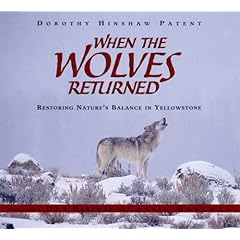
Dorothy Patent's book, When the Wolves Return: Restoring Nature's Balance in Yellowstone, is an IRA Teachers’ Choice winner for 2009. Her current project is a book on the relationships between Indians and horses through time.

My Photo Preview this bookPreview this bookTwo of Vicki Cobb's books from her new Millbrook series, Your Body Battles a Cold and Your Body Battles a Broken Bone, were named as Junior Literary Guild Selections for Spring 2009.

for more: I.N.K. Kathleen Krull

Saturday, April 4, 2009

Snowflake Bentley

Front Cover
By Jacqueline Briggs Martin
Illustrated by Mary Azarian
Edition: illustrated
Published by Houghton Mifflin, 1998
ISBN 0395861624, 9780395861622
32 pages
A biography of a self-taught scientist who photographed thousands
of individual snowflakes in order to study their unique formations.

See the Snowflake Crystals


http://snowflakebentley.com/


Wikipedia

Critical Review of Illustrations

Snowflake Bentley

on-line unit: http://www.eduscapes.com/caldecott/99a.html

other on-line resources for snowflakes:

http://www.teelfamily.com/activities/snow/science.html

Caldecott Award

Each year a Caldecott Medal, named in honor of English illustrator Randolph J. Caldecott, goes to the artist of the most distinguished American picture book for children published in the United States during the preceding year. The American Library Association sets the criteria by which a committee views and judges children’s picture books each year. The committee members consider (American Library Association:

- excellence of execution in the artistic technique employed.

- excellence of pictorial interpretation of story, theme, or concept; of appropriateness

of style of illustration to the story, theme, or concept; of delineation of plot, theme,

characters, setting, mood, or information through the pictures.

- excellence of presentation in recognition of a child audience. (p. 2)

Using this list as a measuring stick, it surprises few that Mary Azarian won this year’s Caldecott Award for her outstanding artwork in Snowflake Bentley (1998). Jacqueline Briggs Martin’s eloquent portrayal of the life of Wilson Bentley, noted authority on snowflakes, provides the perfect prose for Azarian’s colorful woodcut art form. The pictorial interpretation of the story complements Martin’s description of the rural landscape of Vermont as it looked in the late 1800's. Simple, detailed illustrations provide the visual beauty of this book. Woodcuts give a flavor of times past and emphasize line and structure. The framed borders reflect the beauty of snowflakes as Martin describes them to the reader and also provide space to include bibliographic information about Bentley that might have slowed the text down too much for children to enjoy.

Cleverly done illustrations portray the literary elements of a picture book. To judge the worthiness of Azarian’s work in Snowflake Bentley, a look at the way she portrays these elements helps us make sound judgements about the true quality of the illustrations. The illustrations in this award-winning book reflect character, plot, theme, setting, point of view, style, and tone.

Azarian’s portrayal of characters in this book compliments Martin’s description of Bentley, at various stages in his life, his parents, and his friends. On the first page of the book, Martin describes the difficult life of a farmer who must do his work with an ox and sled. Azarian chooses to depict a stoop-shouldered figure coming from a barn in the dark with only a hand-held lantern to light his way as he walks back to the warm glow of the yellow window-lights of his home. The deep snow surrounding the farmer parts way to leave him only a narrow path by which to walk to his house. The lantern lets readers know that the snow’s true color reflects white, but the surrounding snow appears to have a blue-gray tint, alerting the reader to the fact that no artificial street lights exist on this farm. From the very first page readers know something about the farmer holding the lantern.

Azarian’s characters appear robust, round, and solid looking. The clothes they wear seem appropriate for the time in history that this story takes place. Rosy cheeks and smiles let the readers know that little turmoil surrounds the family in this story. Illustrations of Bentley as he reaches adulthood make him look very much like his father. A strong feeling of "family" permeates the text and the accompanying illustrations. Facial expressions on Bentley’s mother suggest demureness and worry lines on his father’s face imply concern and a feeling of disconcertedness. Bentley’s youthful face reflects joy and wonder when he works with his snowflakes, cameras, and as he shows his parents what he discovers.

Azarian’s illustrations also add to the plot of this story. From observing the second page of this book, readers can tell much from the open arms of Bentley as he welcomes the snowflakes onto his mittens. The abundance of snow in this scene reinforces the text in declaring that 120 inches of snow fall occurs here every year. Without words in this text, readers would know that Bentley loved nature, as depicted in the illustrations of him gently holding a butterfly, Bentley bringing his mother apple blossoms, his intent work with a grasshopper, and his constant fascination with snow. Perhaps the most gripping portrayal of plot comes at near the end of the book as Bentley seems "lost" in a blizzard of snow. Azarian depicts Bentley walking away from us into oblivion, his footsteps disappearing behind him.

The theme of this book seems to suggest that people should follow their passion, regardless of what other’s may think or how impossible it may seem (Azarian, 1999). Subordinate themes might suggest the merits of a supportive family and of hard work toward reading a goal. Azarian chooses to show us Bentley depicted as an outsider as he walks past his friends building a fort, to pursue his passion. Other important illustrations relating to theme show Bentley explaining the camera he wants to his mother and his parents discussing the impracticality of such a purchase.

We see Bentley in complete solitude as he works with his microscope and his drawing of snowflakes, suggesting how lonely and long the nights might seem to those pursuing a dream.

Azarian uses all the tricks up her sleeve to bring us the setting in this book. This seems the most powerful story element portrayed by the artist. Azarian’s use of line appears consistent throughout the book. Horizontal and vertical lines meeting at right angles suggest stability. Doorways, panels on doors, paneling, window frames, flooring, and sideboards all indicate to the reader that a sense of security and permanence exists in this story. The artists use of color with muted shades of white, blue, and gray give character to the snow in all phases of the snowfalls. The farm and farmhouse appear inviting and summon the reader to a simpler place and time. Warm colors used inside the house suggest comfort and assurance. We can tell from the illustrations in this book that the place where Wilson Bentley grew up provided him an ideal place to grow and dream. Azarian’s depiction of the setting in this story initially "grabs" the reader and the images stay with the reader long after the book closes.

The point-of-view that Azarian takes in her illustrations matches that of the author, third person. Readers are invited inside Bentley’s home and his dream as the author and illustrator work together to make readers informed observers. Looking at the illustrations in this book mimics browsing through a Bentley family album of snapshots of their lives.

Azarian’s style and tone of illustration in this book plays heavily on realism. People, buildings, and animals appear in proportion to the surroundings. Very calm pictures match informative and straightforward text to tell Bentley’s life story. Openness and honesty flow both from the text and the illustrations in this book.

The very effective pictures in this book enhance and compliment the text. Children will love a book about snow, but on the surface the story of a man who thought of little else seems less than compelling. Azarian lets children feel the snow, feel the passion, and sense that a dream pursued can provide a fulfilling life. We get the emotional context of this story from Azarian’s talented portrayal of the elements that make a story worth telling.

Bibliography

American Library Association. ALSC: Caldecott medal descriptors, history, & criteria. On-line:

Azarian, M. (1999). Caldecott medal acceptance. The Horn Book Magazine, 75(4), pp. 423-429.

Friday, April 3, 2009

Second Interview with Ed Beard, Jr., Award-winning Fantasy Artist

The second weekend of
The Renaissance Faire in Wake Forest
is April 4 & 5, 2009


Visit Ed Beard Jr's Website


Describe the process of creating a dragon or wizard portrait.

The dragon can be looked at in several ways. It is often compared to a flying lizard or pteranodon, a giant chicken with wings or in the eastern culture more of a serpentine snake-like being. Whatever way you perceive the dragon is entirely open to debate. I personally think of a dragon as a combination of a reptile, horse and a bird or bat. With a basic understanding of the anatomy of each of these three creatures, I can combine appendages at certain skeletal junctures to create a functional, or at least somewhat believable, dragon.


How long does it take? Or, which one took the most time? Why?

Paintings that contain multiple figures and many different colors generally take far more time due to the color palette changes. I use acrylic paints therefore the drying time is faster than oils. Typically for a single figure dragon or wizard I will take from 10, to as many as 20, hours. When I am working on a more complex battle scene, it can take upwards of 100 hours, or more.

What inspires you?

I love mythology and legends in folklore, however many writers, such as Tolkien, have laid the base or ground for the imagination to expand from. I personally enjoy speaking with the public when I attend conventions and Renaissance Faires and getting the wide variety of concepts they offer.


Who or what was the most unusual (for you) inspiration for a fantasy work?

Not long ago I received an e-mail from a young collector from Florida. The commission request entailed creating a Red Dragon that epitomized this young man's battle with a chronic illness. The request described a Red Dragon trapped in a cave (representing the lack of a cure) with heavy chains around the neck, arms, and legs of the dragon just beginning to be broken (symbolizing the power to overcome this disease) and a break in the ceiling of the cave where light would come shining through that symbolized the hope of a cure. In the end, this was the most moving and inspirational work I have done using a dragon as the subject.


What inspires the skeletons of dragons?

I recently embarked on an instructional "How to Draw the Dragon" book project that I will be publishing, just as I did with "The Enchanted Realm, Art of Ed Beard Jr." art book that came out two years ago. In this book, I will take the reader from the anatomical skeletal structure, to the musculature and variety of scales and characteristics. I also will take the reader through the variety of species and their environment. The European or western dragon tends to have elements of the horse, reptile, and bird or bat skeletal anatomy.

What is the "back story" on your favorite dragon?

One of the dragons, that seems to be somewhat iconic for my work due to the fact that it has appeared on many different licensed products, is called "Bravery Misplaced". This is the classic portrayal of where the brave knight has underestimated his abilities when he comes around a bend and is face to face with a gigantic Dragon. The other dragon is entirely a different approach in that it shows an intellectual scholarly dragon sitting in his study transcribing the ancient tongue of his ancestors. This is titled "Ancient Dragon Scholar."


Who is your favorite wizard?

It would have to be Merlin as I am fond of Arthurian Legend.

Your favorite monster?

The werewolf has been a favorite of mine but I would also include other horror-type subjects like the headless horseman from "The Legend of Sleepy Hollow."


Describe the most fantastic wings you have ever created. What inspired you or them?

The majestic nature of dragons incorporates the wings spread wide open. I have created two versions that I feel depicted this characteristic most effectively. The first is titled "Winter's Spirit" a celestial spirit Dragon that returns to its favorite perch from the heavens on a cool winter's night. The other is a crimson Red Dragon who has taken possession of a keep or castle and is powerfully perched upon the top of this castle looking down on a warrior who has requested access to this castle of treasures.


When you speak to a young artist (age 10 to 12), what advice do you give?

1. To study anatomy, light sources, perspective, and all of the nuts and bolts that are required for a good foundation in illustration. 2. Repetition and practice are the only way to master the skill. 3. To ignore anyone who attempts to tell them that Fantasy Art is a waste of talent or an invalid art form. 4. Have those negative individuals to visit my website if they are in doubt of the legitimacy of this amazing field.


When you speak to an artist in high school who wants to create fantasy art, what advice do you give?

Basically the same as the younger student, but with an emphasis on maintaining a tangible medium and not simply surrender to what is easier or more "efficient" as with digital programs. I remind them that creating a one-of-a-kind original painting that can be collected is a great source of income as well as sustaining the original art form. I further express how being able to do both digital and hand-painted work create a more sustainable career and a much better income.


When you speak in schools, who asks the best questions? What are some of the most interesting?

Definitely the grades 3 to 6. They are the least inhibited, and their minds are like a sponge calculating all of the most inquisitive questions imaginable. Once I was asked by a third grade student, "Have you ever painted a picture that you got stuck half way through and run out of ideas for?" or "How do you save a painting that you have made a mistake on without starting all over?"

In one case a fifth grade student asked whether I "have ever been stumped and not been able to imagine a scene, and just stare at the black canvas."


Define creativity.

The ability to take a thought or a concept and manifest it to a visual or auditory representation of that thought or idea. Music, art or literature are all conduits to communicating with one another; each is the vehicle for creative expression.


What great questions did I not ask?

What should be the role of an art teacher?

An art teacher should identify the student's strong and week points, then watch how the student approached the task at hand. Once these evaluations have been established, it is the teacher's job to find a way to utilize these natural tendencies of the student and direct and use those tendencies to improve the techniques of the student. A teacher should never attempt to mold the student into a clone of himself or herself. It is the job of a teacher to take the spark in that student and grow it into his or her own unique flower.

Thursday, April 2, 2009

Interview with Ed Beard, Jr., Award-Winning Fantasy Artist

I had the pleasure of meeting Ed and his wife Kelly at
The Renaissance Faire in Wake Forest,
March 28, 2009
VISIT HIS WEBSITE

Here's a Review:
I have been collecting and selling fantasy art for several years
at my store Mark's Comics & Collectibles in New York.
I have dealt with Ken Kelly, Larry Elmore, Clyde Caldwell, Brom,
R.K. Post, Luis Royo, and too many others to name.
I own originals from all of them. Out of all the artists I know and have dealt with,
I have only asked one to do a commission for me. You guessed it, Ed Beard Jr.
I gaze at both the original painting as well as the original pencil as I type
this review, and I am still awed by the them. I am biased,
but I feel the painting he did for me, "Valkyries Raid",
is the best he has ever done, and that is what you want in a commission.
I loved it so much, I recommended to a friend to commission
Ed to do one for him as well. His is called "Sword of Solaris",
and I know he was overjoyed with it as well. Make sure you contact
Ed if you are even thinking of asking about a commission.
You will not be disappointed. I have never met anyone else,
except for Larry Elmore, who can pick up a pencil or marker
and just draw like Ed can. I sat with Ed for hours at a convention once,
as well as at my dining room table, and watched him draw,
with no reference material, dragon after dragon, wizard after wizard,
and goblin after goblin and no 2 are the same and all were fantastic.
Ed is not just an artist, he is a personality.
Make sure you find time to go to a convention or a Ren Faire he will be at.
You will not be disappointed.
He is one of the most giving artist's with his time.
He will talk to you about anything and everything, not just art.
Artist, teacher, husband, father, and friend,
"Ed Beard Jr." the true renaissance man.
by Mark Aronowitz

We had a great chat about the role of art in literacy
and
the creative process.
He agreed to an interview.
This is Part 1 of 2. Enjoy!
Sharon

What role does art play in the enjoyment of fantasy literature?

Art and illustration play an even more significant role in fantasy literature because of the subjects that are often based upon myth or legend. It is the goal of the fantasy Artist to make that which is not of our realm appear believable or at least plausible. The challenge for the fantasy artist is to capture the essence of the written word and transform that concept into visual reality.

Is the role of fantasy art in young adult fiction different from the role of art, say, in picture books or chapter books?

In some cases the young adult fiction cover art may incorporate more graphic images, such as great peril or battle scenes, that may be a bit too aggressive for young readers. Creating images that are both appealing to a specific target age group, as well as unique and dynamic enough to draw the young reader's imagination, is always an invited challenge.

How do students say they come to fantasy art? For the art? For the literature?

In other words, for students, does art lead to literature, or does literature open the world of art?

It truly is a synchronistic process from the student's point of view. Students are engaged both visually and through the written word. However, the offspring to the marriage can be inspiring to seek out more visual stimulation. This in turn, more times than not, inspires great fiction. Sort of like the phrase "which came first the chicken or the egg".

What was the process of creating illustrations for novels?

Although not typical for most publishers, I prefer to work directly with the author, when I can, to get the first person interpretation of what the author feels is the pinnacle moment or scene of the book that best summarizes or focuses on the topic. The key is to not give away too much in the image that may be obvious to the faithful readership especially if the book is in a series. I never want to spoil the plot before the reader digs into the book. The key to illustration and representational art is to capture what the author is essentially trying to communicate, yet maintain the artist's own unique perspective.


Has a writer ever been inspired by your art and created a work around it?

Yes, as a matter of fact, I host many young authors (age 18 and younger) on my website. They choose a painting that I have created entirely in my own mind's eye, and they create a short story about the image. After review of the submission, I publish the short story along side the art offered in my website via a link. Lit Link Bravery Misplaced

Lit Link Winter's Spirit

Speak about inspiration versus perspiration in your creation of art.

Before I actually begin to lay out my pencils, paper, paints and canvas, (yes I am old school in that I actually prefer real tangible mediums over digital programs) I spend a great deal of time researching any possible connections with the real world such as history, legends, myth and folk lore. Although ideas come to me often through trying to create an even more interesting version of the last Dragon or Wizard I have painted from my imagination, referring to something that people can relate to is what connects the viewer to the world I am trying to portray. Once I have the basic concept locked in my imagination, I proceed to put it on paper. Once I have a detailed rendering of the image, I then decide on a color palette. The actual painting takes me on a journey of its own in many cases. I am often amazed at the direction and end result of a painting, as it developed from a B/W line drawing to a full-color finished painting.

Why do you continue visiting schools?

Aside from the fact that children need to have a passionate, motivated person to inspire them to consider art and the legitimacy it can offer as a future career, I feel a great sense of obligation to share my experiences and blessings. In addition, young people are often full of wonderment and not afraid to ask the tough questions. I get just as much out of a day at the Book Faire as the students do.

To what factors do you attribute your success?

I think that the key to any creative-based career, whether it be music, art or theater, requires a combination of qualities and characteristics. I was blessed to have been given the eye and imagination to create. I then had the passion to hone my skills and put in the work necessary to bring it to the market place. Then I had the burning drive to accomplish what I wanted in the life of a Fantasy artist and illustrator. The final ingredient was to be able to connect with people and nurture a collector's audience that enjoyed collecting my work and wanted to share in that journey as well. So, in short, hard work and practice, passion and drive and good communication with those who like what I do.

Enchanted Realm, the Art of Ed Beard, Jr.

Ed Beard Jr.'s first Art Book. Inside this amazingly detailed book you will find over 200 images! This book has 98 pages and includes; in-depth discussion about technique, the artist's roots in fantasy art, creating visual reality from creative written fiction, creating dragons, fey folk and monsters that are based in Myth and Lore.

Inside you will find many familiar published works of Ed's from Tolkien to Magic: The Gathering and even never before seen and unpublished art. Over 80 images in full color! Foreword by Legendary Fantasy Artist Larry Elmore.

Monday, March 30, 2009

Fantasy Artist Ed Beard, Jr.

Calling all Young Adult Readers

interested in Fantasy!

Ed has illustrated for Tolkien Lord of the Rings products
and other fantasy novel authors.

"Art is far more than just the end result of a visual image,

it's the journey one takes to get there along with

the unique tangible product made from hand Craftsmanship

that is produced that completes the task!"~ Ed Beard Jr.

http://www.edbeardjr.com/EdBeardjrwebbiopic.jpg

At the Renaissance Faire in Wake Forest, NC
on Saturday, March 28, 2009,
I had the pleasure of meeting Ed and his lovely wife Kelly.

Ed had always been inspired by the masters of the Renaissance Period,

madonnachild.jpg (58372 bytes)
and he created this image at age 11. He studied
anatomical physiology and other medical anatomical applications
to better understand the human body.

Ed is an accomplished fantasy artist who has been creating
dragons, monsters, and just about every image of a creature
you could imagine, for over 25 years.

Ed Beard Jr. is the most successfully licensed
Dragon and Wizard fantasy artist with the most diverse selection
of products using his art in the world.
With over 1000 licensed images manufactured by
over 100 companies world wide,
Ed is a household name in fantasy.

Have you downloaded the Fantasy Art Dragons and Wizards
content or wallpaper from
Verizon?
Do you own a Dragon calendar from TideMark
from the past five years or have a Mountain Corporation
fantasy T-Shirt from the past 9 years?

Or maybe you've seen a Heaven and Earth
Designs and Essentials fantasy cross stitch pattern?


Ed has agreed to an interview with me
about the role of art in literacy and
his experiences in speaking with
students in schools. We'll also chat about
creativity and the creative process,
dragon skeletal structure
and wing musculature.

Visit his website!

Original Book Cover Art & Free Books

Book cover of Anne of Green Gables by Lucy Maud Montgomery

Book cover of Enchanted Castle, The by E. (Edith) Nesbit

Book cover of Peter Pan by J. M. Barrie

Book cover of Story of the Treasure Seekers, The by E. (Edith) Nesbit

Book cover of Wonderwings and other Fairy Stories by Edith Howes

A FEAST for the Eyes


Art washes away from the soul the dust of everyday life.
Every child is an artist.
The problem is how to remain an artist once he grows up.

Pablo Picasso (1881 - 1973)
In searching for sources of free audio books, I found
Books Should Be Free and rushed to the Children's Category.

http://www.booksshouldbefree.com/category.jsp?tag=4

Here I found a Treasure Chest of not only free text
(to continue reading on the screen or download as a plain text file)
and free audio MP3 files for downloading,
but also the original (perhaps) book cover art,
some of which are sampled here.
On the page, click on each for a larger view.

If nothing else, with your child compare (contrast)
the covers of Peter Pan or Anne of Green Gables
with the current ones
and talk about which s/he likes better and why.
MI: Interpersonal and Intrapersonal

Without having technical knowledge, we each know what appeals to us.
Explore the art in your library (MI:Kinesthesic, Visual) or online (MI: Visual).
And, no matter how you value Picasso,
at least for me, I agree with him -
art washes away from my soul

the dust of everyday life and fills it with beauty.
Give yourself and another this gift, won't you?

Book cover of Voyages of Doctor Dolittle, The by Hugh Lofting

Book cover of Burgess Animal Book for Children, The by Thornton W Burgess


Wednesday, March 25, 2009

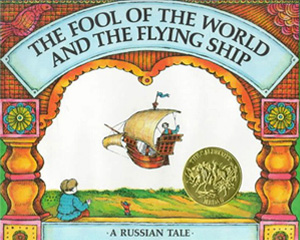
The Fool of the World and the Flying Ship

File:CM fool ship.jpg
Author Arthur Ransome
Illustrator Uri Shulevitz
Country United States
Genre(s) Children's picture book
Publisher Farrar
Publication date 1968
ISBN ISBN 0374424381
The Fool of the World and the Flying Ship
 is a retelling of a Russian fairy tale illustrated
by Uri Shulevitz. It is based on Arthur Ransome's
version of the story in Old Peter's Russian Tales.
 The book was released in 1968 by Farrar
and won a Caldecott Medal for illustration in 1969. [1]

References

  1. American Library Association: 
  2. Caldecott Medal Winners, 1938 - Present.
  3. URL accessed 10 May 2007.
His mother couldn't take time to see him on his way,
but the Fool of the World found the flying ship and the
companions whose powers would gain him the Czar's daughter.
 Made visible in the rather raw colors of peasant decoration and

with an air of good-humored raffishness, this boasts
Brueghel-like panoramas of old Russia from the flying ship,
laconic closeups of the Swift-goer, the Eater, the Drinker, etc.
 doing his thing. There's no show-off about Uri Shulevitz's illustrations;
 they serve the story and serve it up in character. Altogether
one of the most pungent of Old Peter's Russian Tales done to a turn.

Kirkus Reviews Copyright (c) VNU Business Media, Inc.
'

Butterfly Eyes


Butterfly Eyes and Other Secrets of the Meadow
by: Joyce Sidman; Beth Krommes (Illustrated by)


ISBN-13/EAN: 9780618563135; $16.00
ISBN-10: 061856313X
Hardcover, Reinforced Binding;
48 pages
Publication Date: 09/15/2006
Illustrations: full color
Trim Size: 9.00 x 10.50
Carton Quantity: 26
Age Range: 7-10 years
Grade Range: Grades 3-5


Subject(s):
JUVENILE NONFICTION: Nature / General

Description:
Discover the hidden world of the meadow in this unique
combination of poetry riddles and science wisdom.
Beginning with the rising sun and ending with twilight,
this book takes us on a tour through the fields,
encouraging us to watch for a nest of rabbits,
a foamy spittlebug, a leaping grasshopper,
bright milkweed, a quick fox, and a cruising hawk.


Reviews:
From Kirkus Reviews, Starred
"Combining striking illustrations, evocative poems
that do double duty as riddles and lucid prose commentary, this venture into the natural world stands out for both its beauty and its unusual approach."


Tuesday, March 24, 2009

The Hello, Goodbye Window

Front Cover
The Hello, Goodbye Window
By Norton Juster, Chris Raschka, Christopher Raschka
Illustrated by Chris Raschka, Christopher Raschka
Edition: illustrated
Published by Hyperion Books for Children, 2005
ISBN 0786809140, 9780786809141
32 pages
2006 Caldecott Medal Winner
School Library Journal

*Starred Review*

PreSchool-Grade 1 The window in Nanna and Poppy's kitchen is no ordinary window. It is the place where love and magic happens. It's where the girl and her doting grandparents watch stars, play games, and, most importantly, say hello and goodbye. The first-person text is both simple and sophisticated, conjuring a perfectly child-centered world. Sentences such as "When I get tired I come in and take my nap and nothing happens until I get up" typify the girl's happy, imaginative world. While the language is bouncy and fun, it is the visual interpretation of this sweet story that sings. Using a bright rainbow palette of saturated color, Raschka's impressionistic, mixed-media illustrations portray a loving, mixed-race family. The artwork is at once lively and energetic, without crowding the story or the words on the page; the simple lines and squiggles of color suggest a child's own drawings, but this is the art of a masterful hand. Perfect for lap-sharing, this book will find favor with children and adults alike.
- Angela J. Reynolds. Copyright © Reed Business Information, a division of Reed Elsevier Inc. All rights reserved.


BookList

From BookList, March 15, 2005, Copyright © American Library Association. Used with permission.

*Starred Review"

PreS-Gr. 2. Two well-known names come together in a book that speaks to the real lives of children and their experiences. The young narrator visits her grandparents, Nanna and Poppy, in their big house. They explore Nanna's garden, and Poppy plays his harmonica. The narrator rides her bike and takes a nap, "and nothing happens till I get up." Looking out the picture window, the "hello, goodbye window," she sees the pizza guy, and, more fancifully, a dinosaur. She also spots her parents coming to pick her up. The curly-haired girl is happy to see them, but sad because it means the end of the visit. The window imagery is less important than the title would make it seem. More intrinsic is Juster's honest portrayal of a child's perceptions (a striped cat in the yard is a tiger) and emotions (being happy and sad at the same time "just happens that way sometimes"). Raschka's swirling lines, swaths, and dabs of fruity colors seem especially vibrant, particularly in the double-page spreads, which have ample room to capture both the tender moments between members of the interracial family and the exuberance of spending time in the pulsating outdoors, all flowers, grass, and sky. IleneCooper.